
There is something particularly revealing about Paris Fashion Week when three houses as different as Saint Laurent, Chloé and Dior present their visions of the same season. They do not necessarily speak the same fashion language, nor do they share the same idea of femininity, but together they reveal something about the particular atmosphere of Paris itself: its ability to make glamour feel cinematic, romance feel modern and history feel completely alive. For Spring/Summer 2027, Anthony Vaccarello, Chemena Kamali and Jonathan Anderson approached their respective houses from very different directions, yet all three collections seemed to revolve around the same fundamental question: what does it mean to be a woman in Paris now, while still carrying the weight of everything that came before?
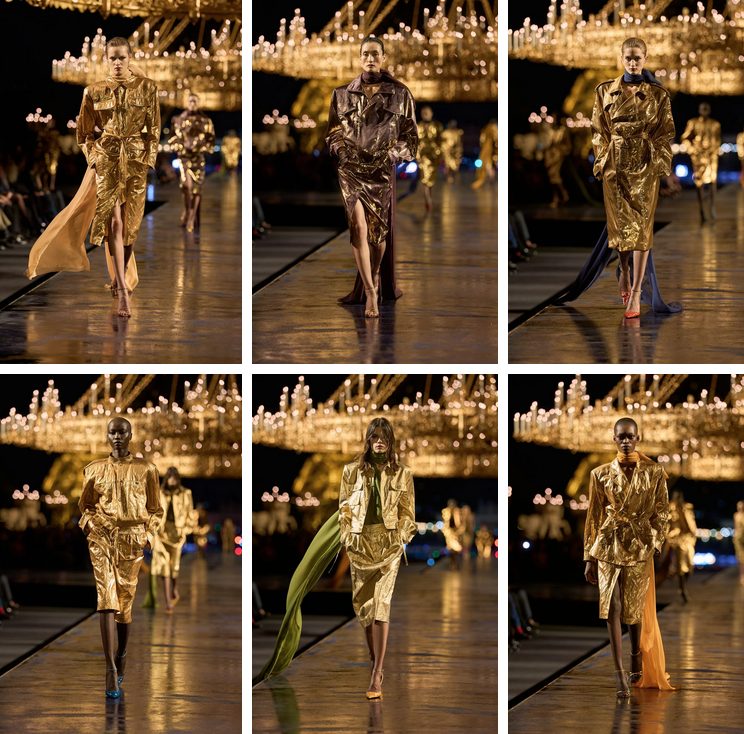
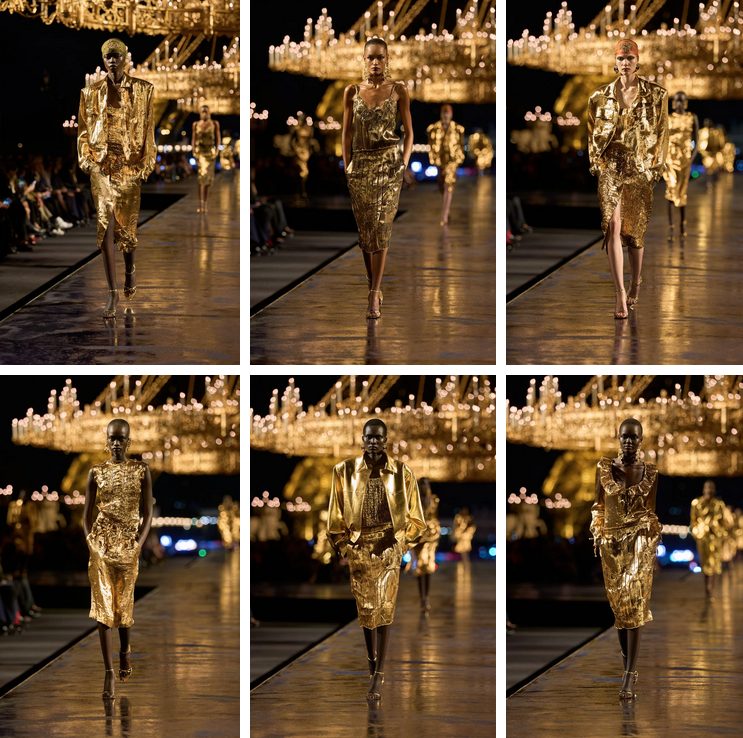
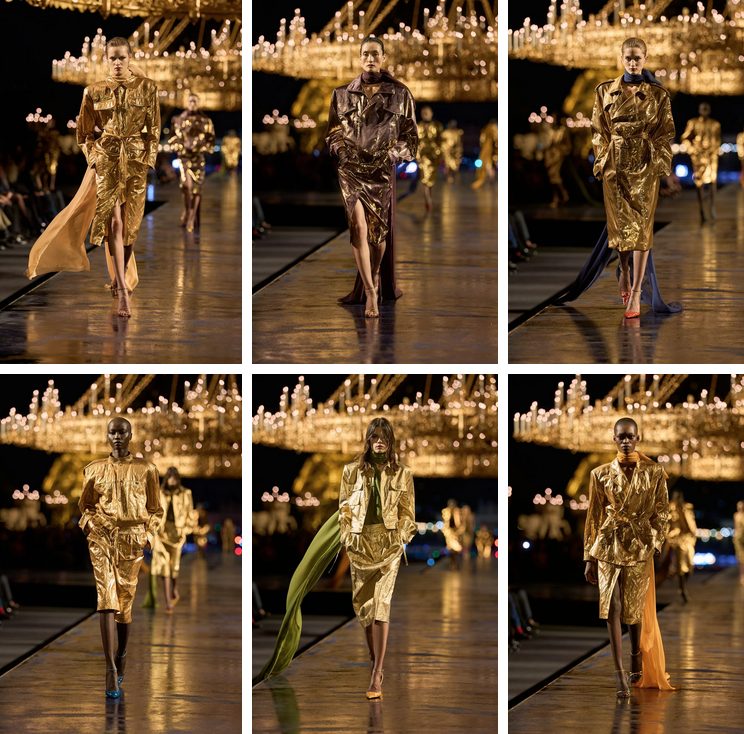
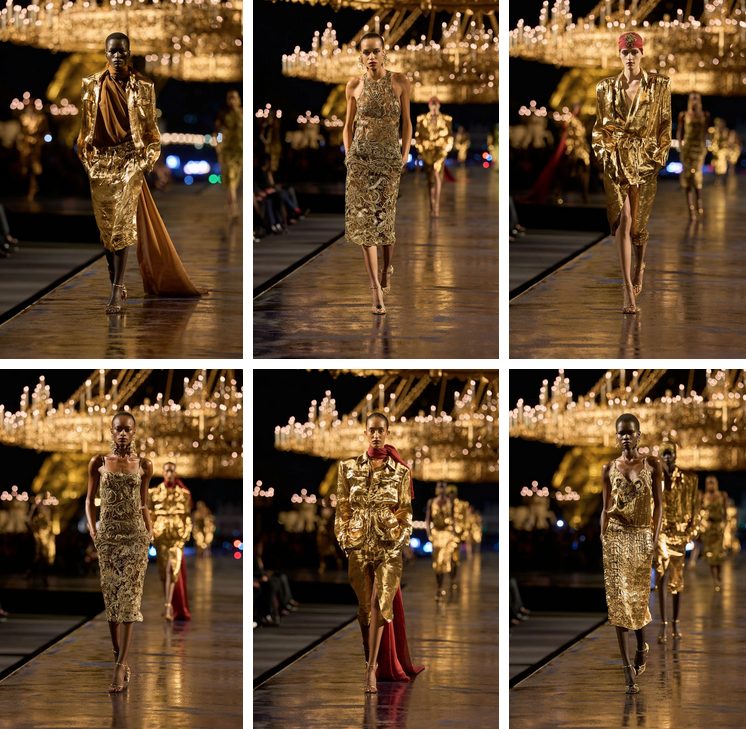
Perhaps nowhere was that tension between past and present more emotional than at Saint Laurent, where Anthony Vaccarello’s Spring/Summer 2027 collection appeared to carry the atmosphere of a farewell. Ten years and two days after his Saint Laurent debut, Vaccarello presented a collection saturated in gold before sending out a final series of black looks, creating an unmistakably ceremonial feeling around the show. Vogue noted the significance of the timing and the emotional character of the presentation, while Charlotte Gainsbourg’s surprise performance at the end, accompanied by the words “You are so much, Yves Saint Laurent,” gave the finale an almost elegiac quality.
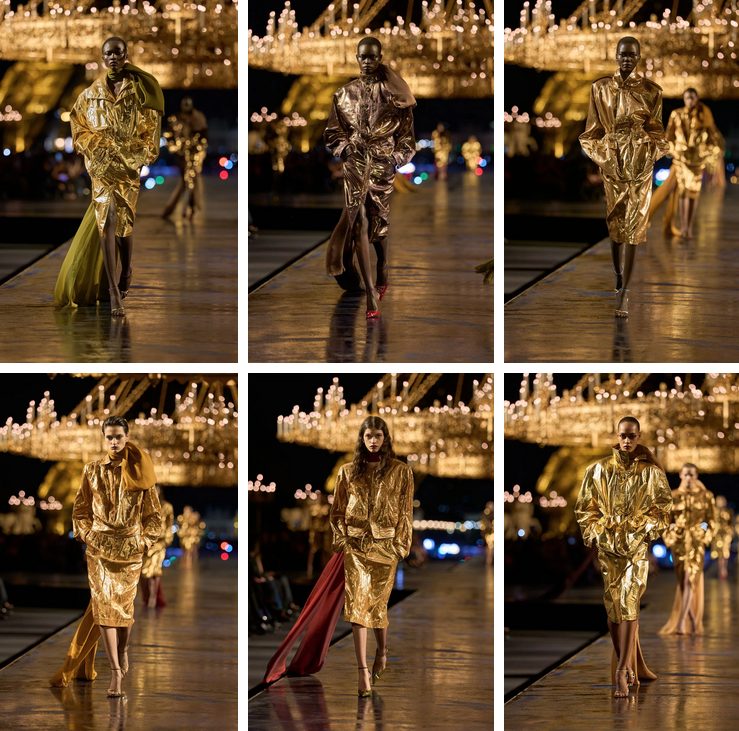
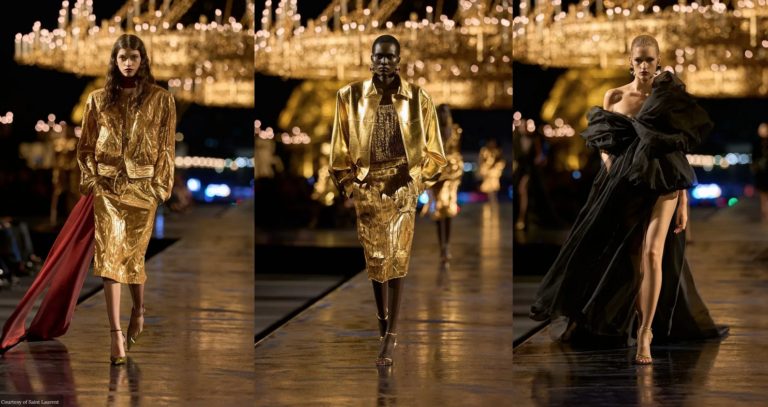
The clothes themselves amplified that sense of spectacle. Gold became the dominant language, appearing across the collection with a richness that felt deliberately excessive, almost as if Vaccarello were turning the familiar codes of Saint Laurent—nightlife, sensuality, sharpness and Parisian glamour—into their most concentrated form. There was something theatrical about the abundance of metallic surfaces and the way the silhouettes carried themselves, but underneath the extravagance was an unmistakable connection to the history of the house. The collection seemed to understand that Saint Laurent has always been at its most powerful when fashion becomes attitude: when a woman does not simply wear a beautiful garment, but enters a room already possessing the confidence that the garment suggests.
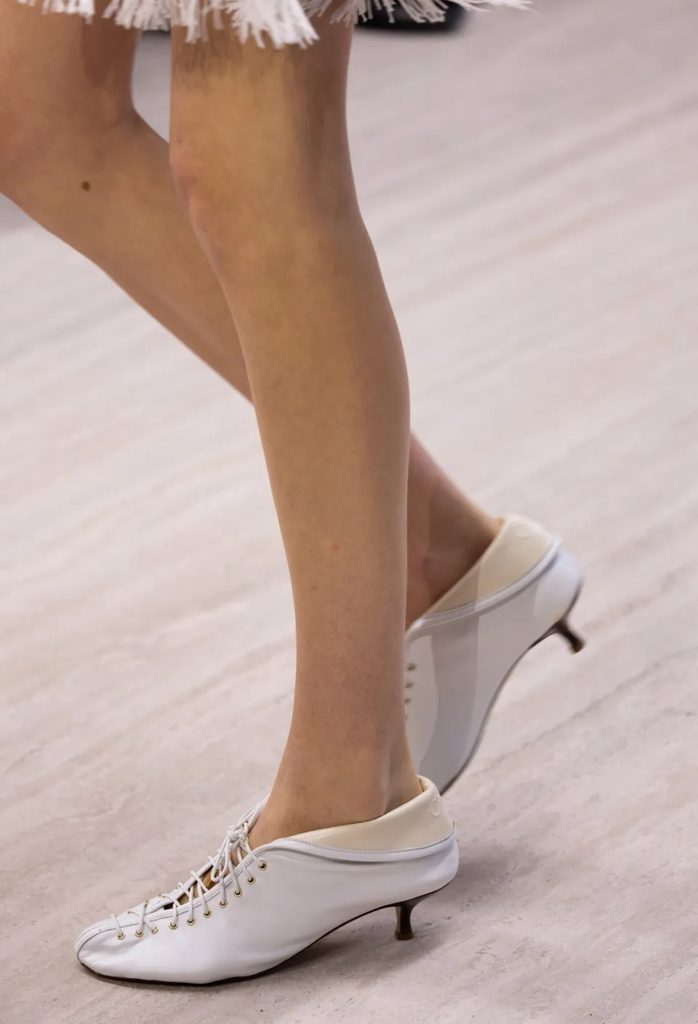
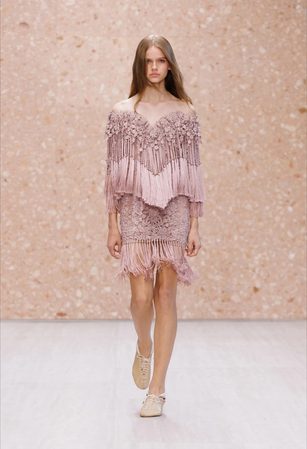
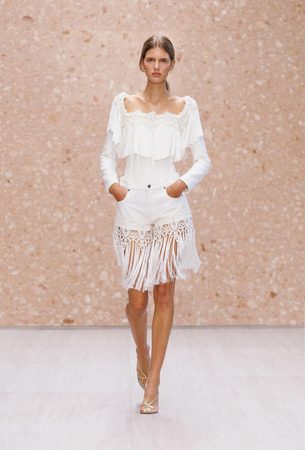
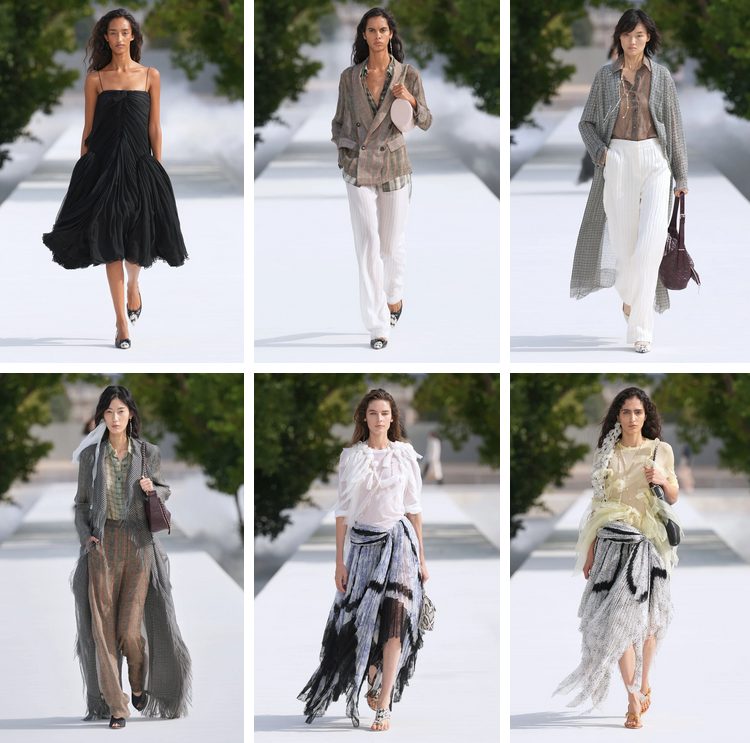
If Saint Laurent explored glamour through the language of spectacle, Chloé approached femininity through movement, texture and romantic memory. Chemena Kamali’s Spring/Summer 2027 collection was described as an expression of her personal obsessions with the house, drawing together many of the elements that have become central to her vision since taking over the brand. Eyelet lace, broderie anglaise, lingerie, fringe, florals, rainwear, tailoring and 1970s references came together in a collection that felt deeply rooted in Chloé’s history while allowing Kamali to become more visibly herself.
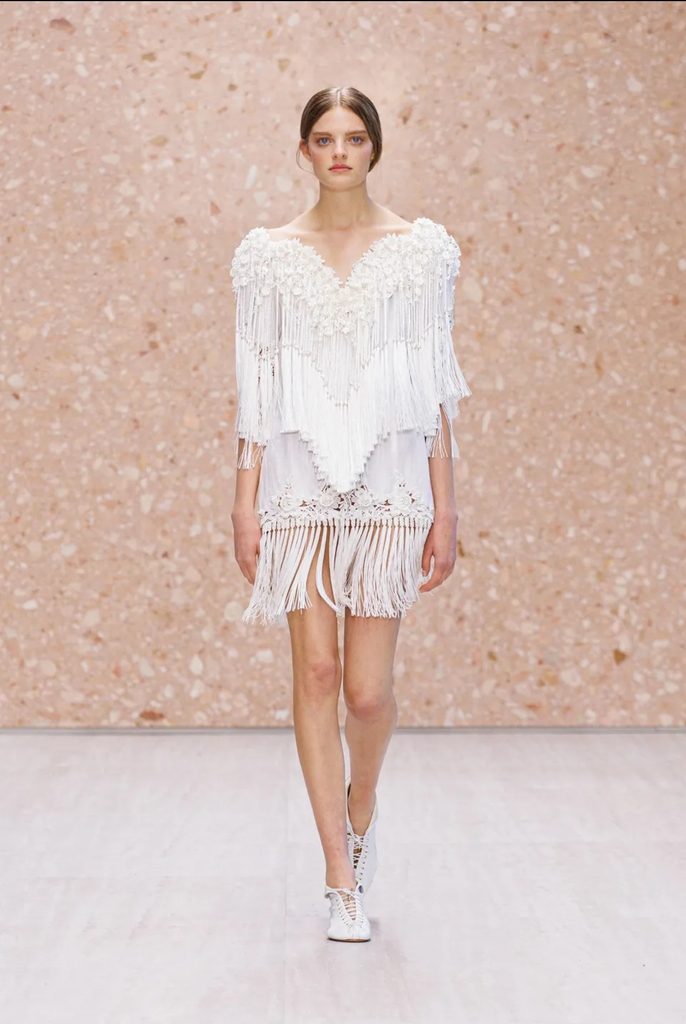
The result was bohemian, but not in the predictable sense of the word. Kamali pushed the familiar Chloé vocabulary into something more vivid and sometimes more daring, introducing saturated tomato red and yellow, dramatic sleeves, wide-brimmed hats and weather-ready outerwear alongside delicate lace and long romantic dresses. Fringe moved with the body, lace revealed and concealed the skin, while trenches and raincoats introduced a practical element that prevented the collection from becoming purely nostalgic. The contrast was important: romance was not presented as fragility, but as something capable of existing alongside utility, sensuality and strength.
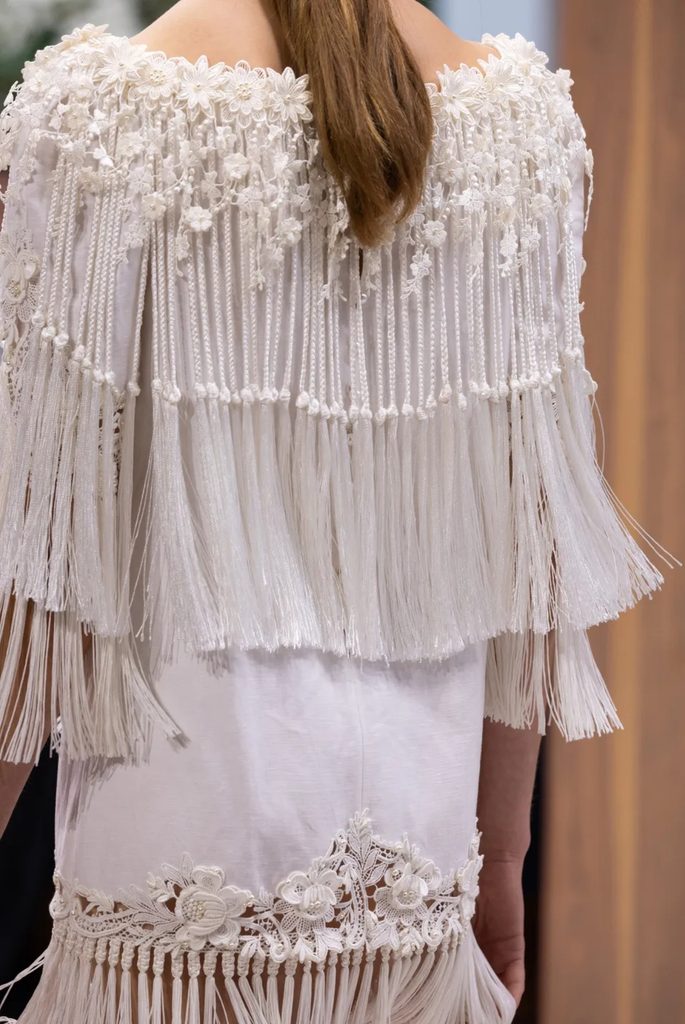
There was also a particularly beautiful sense of continuity within Kamali’s approach. Rather than treating Chloé’s archive as something sacred and untouchable, she seemed to use it almost as a personal wardrobe of memories, returning to different decades, silhouettes and details and allowing them to collide. References to earlier Chloé eras, including 1960s floral embroidery and the house’s historic relationship with broderie anglaise, were translated into contemporary dresses, fringed separates and modern outerwear. In that sense, Spring/Summer 2027 felt less like an archival exercise and more like a designer finally becoming completely comfortable with her own interpretation of the house.
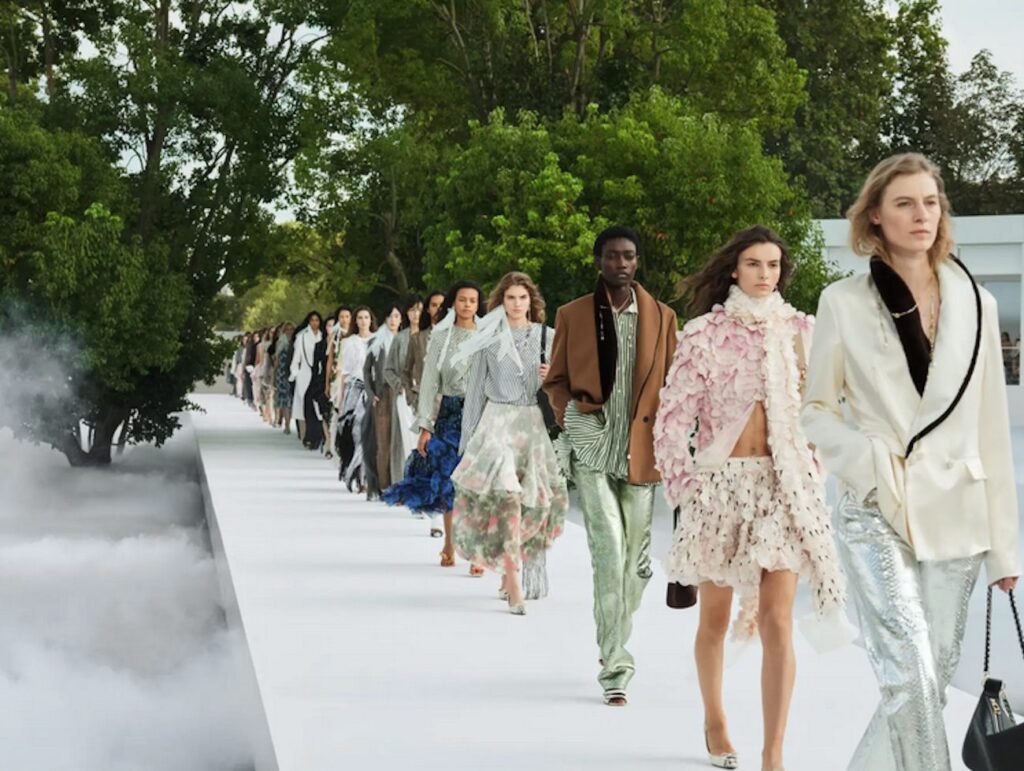
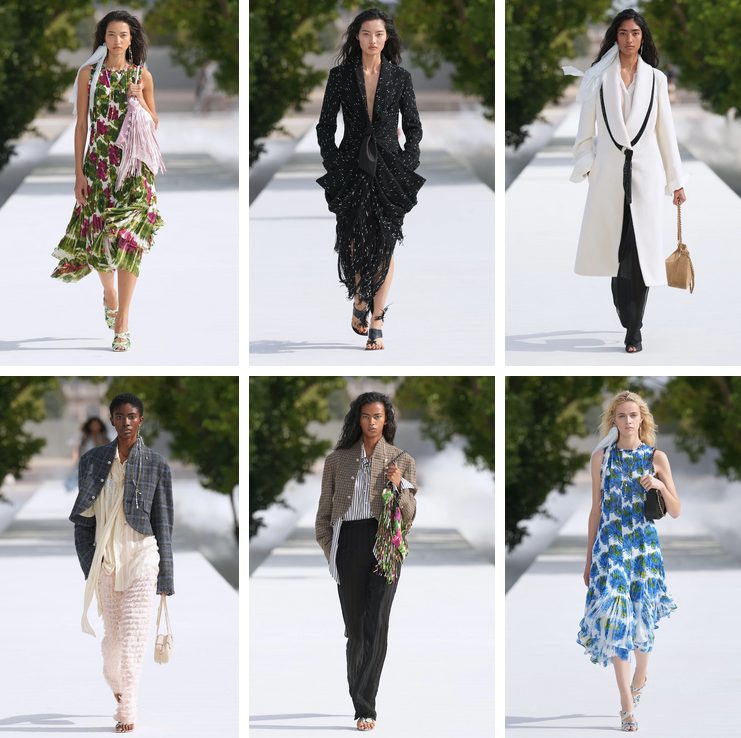
And then there was Dior, where Jonathan Anderson explored yet another version of femininity: one defined not by overt glamour or bohemian sensuality, but by lightness. Presented in the Jardin des Tuileries, the Spring/Summer 2027 collection unfolded across the water beneath a cinematic veil of mist, creating an atmosphere in which the clothes appeared almost weightless. Anderson’s Dior woman seemed to be gradually emerging from the rigid architecture of traditional tailoring and becoming softer, more fluid and more instinctive.
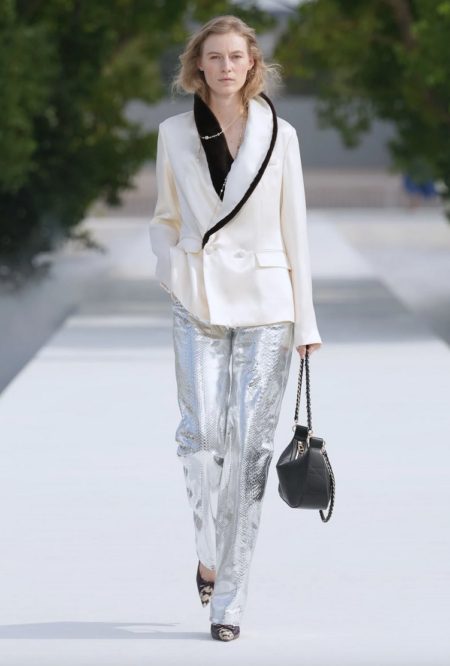
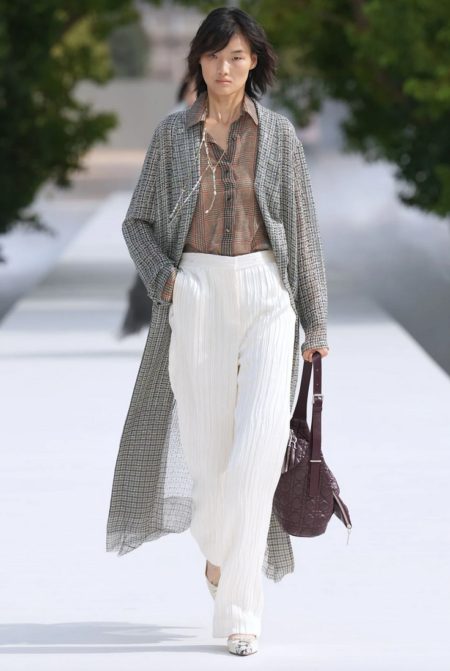
Flowers were central to this transformation, but they were not simply decorative motifs scattered across dresses. They became almost structural ideas. Chiffon petals, delicate floral details and botanical references appeared throughout the collection, recalling Christian Dior’s own fascination with gardens and flowers while translating that heritage into something much lighter and more contemporary. The iconic Bar jacket, one of the strongest symbols of the Dior archive, was loosened and reinterpreted in softer fabrics, allowing the authority of tailoring to remain while its traditional rigidity seemed to dissolve.
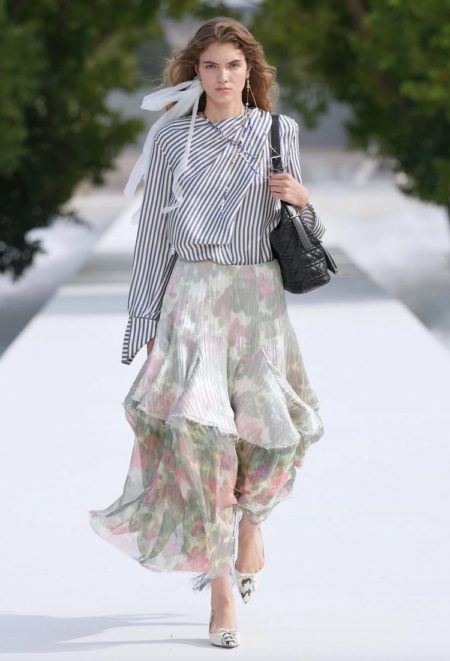
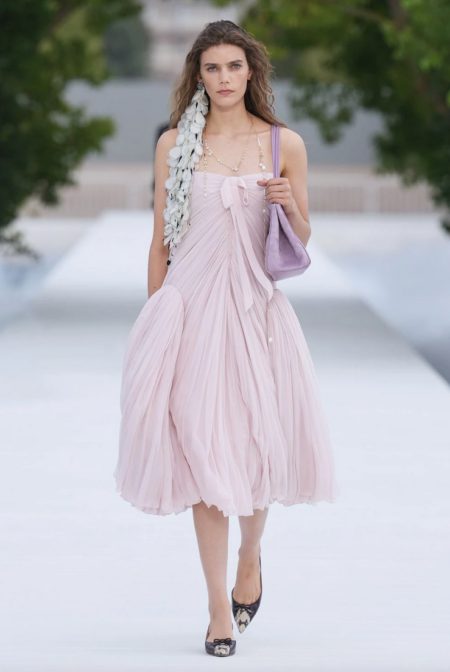
That idea of transformation extended beyond the clothes. Anderson’s invitation, which came with two wénwán walnuts, introduced the notion of nature, time and patina, referencing the Chinese tradition of rolling walnuts in the hand until their surfaces develop naturally over time. It was a subtle metaphor for the collection itself: Dior’s history does not have to be preserved in exactly the form in which it was created; it can be touched, handled, softened and changed, allowing something new to emerge from the original object.
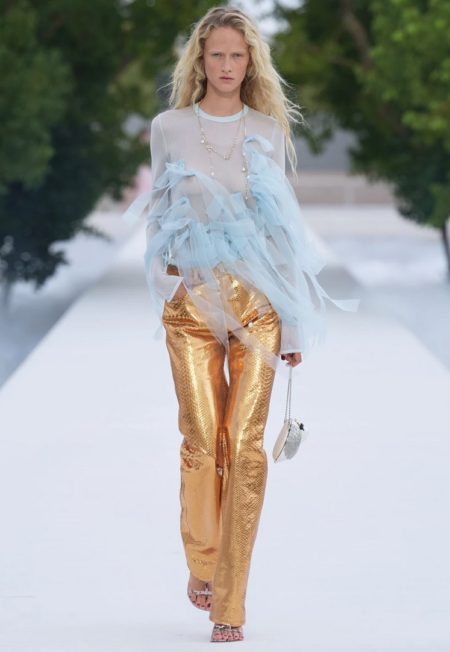
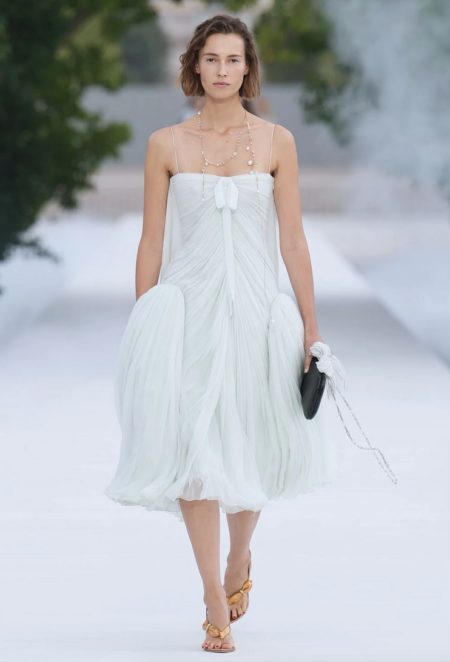
Seen together, these three collections form an unusually coherent portrait of Parisian fashion today. Saint Laurent looked backward through glamour, Chloé through romantic memory, and Dior through the transformation of heritage. Yet all three understood that fashion becomes most powerful when history is not simply repeated but interpreted. Saint Laurent turned its own mythology into something almost cinematic, using gold, black and performance to create the feeling of a final chapter. Chloé embraced its archive with emotion but refused to become trapped inside it, allowing bohemian romance to become more sensual, practical and expressive. Dior, meanwhile, took some of the most recognisable elements of its own history and made them lighter, more fluid and more contemporary, proving that heritage can survive precisely because it is capable of changing.
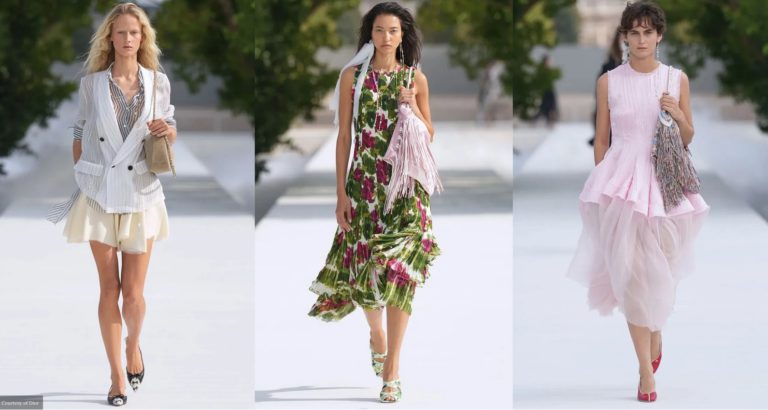
What connects them is also what makes Paris so particular as a fashion capital. These are not collections that exist independently of their surroundings. Saint Laurent’s presentation carried the emotional weight of Parisian music, cinema and nightlife; Chloé’s romantic vocabulary belongs to a very specific idea of French femininity; Dior unfolded inside one of the city’s most historic gardens, where nature, architecture and fashion became part of the same composition. The city does not simply host these collections—it gives them another layer of meaning. And perhaps that is why the three houses feel so naturally connected despite their differences. Paris has always understood that fashion is not only about clothing. It is about atmosphere, memory, identity and fantasy. Saint Laurent gives us the woman who walks into the night dressed in gold, Chloé gives us the woman moving through the city with lace, fringe and wind catching her clothes, while Dior gives us the woman emerging into the light, surrounded by flowers and softened silhouettes.
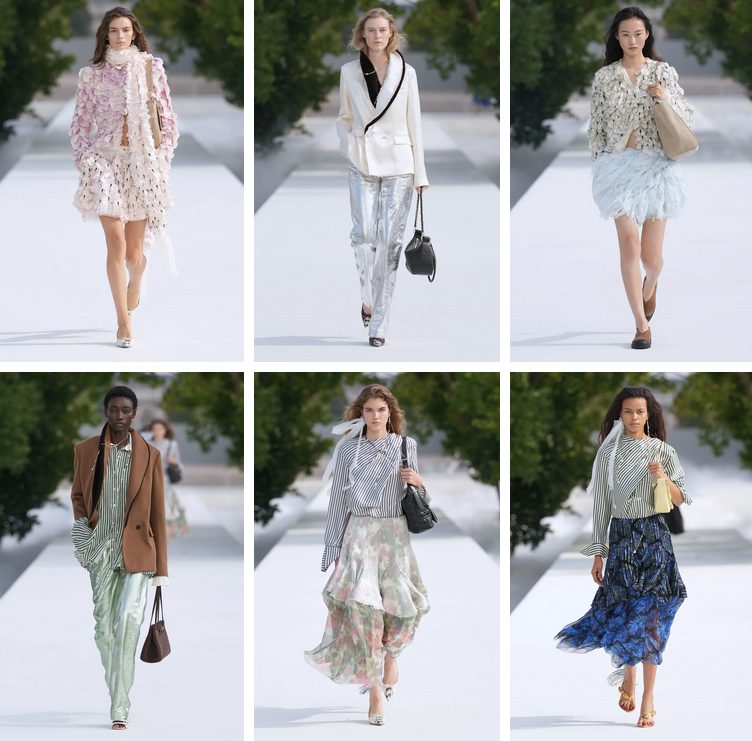
Three different women, three different visions of femininity, and yet one unmistakably Parisian idea: that clothes should make you feel something before they make you think about what they are. For Spring/Summer 2027, Saint Laurent, Chloé and Dior each found their own way of proving that fashion can still be emotional, theatrical and romantic without becoming trapped in nostalgia. The past is there, but it is moving. The archive is there, but it is breathing. And Paris, as always, is where those two things meet.
Dear reader, you may like also this:
Why Paris Still Feels Different: The City That Turned Fashion Into a Cultural Event