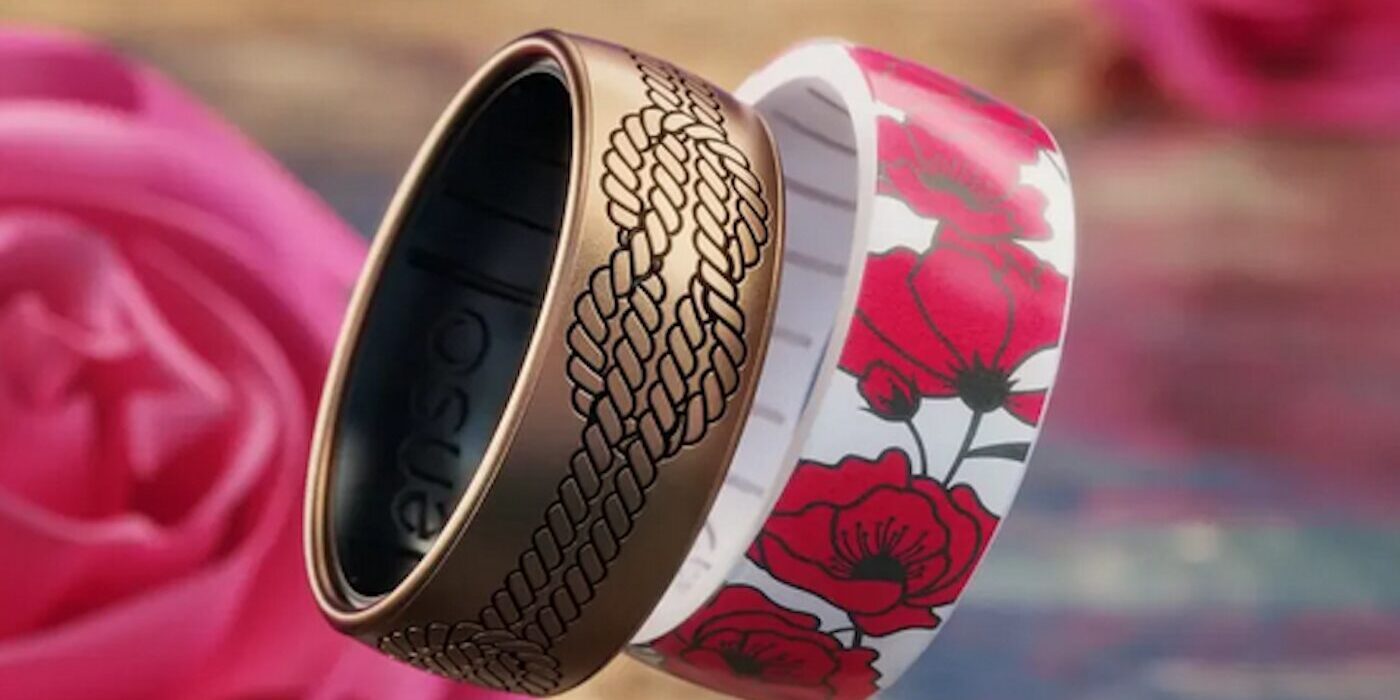

Wedding rings are one of the few pieces of jewelry most people wear every single day, through workouts, showers, physical labor, and everything else in daily life.
The literal rigidity of traditional wedding rings can pose significant safety concerns, and silicone wedding rings offer a much safer, stylish option. A ring that yields under pressure rather than holding firm has significant safety implications, particularly for people working around machinery or equipment with snagging hazards.
But the appeal has expanded well beyond that original use case, driven by improvements in design and material quality, and by a broader shift toward everyday accessories that can actually keep up with how people live.
The Mechanics of Why Silicone Rings Work
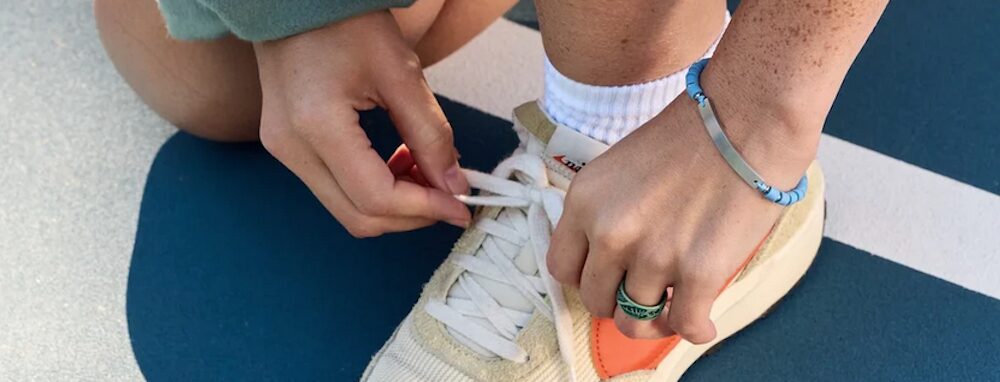
The material at the core of quality silicone rings is liquid silicone rubber, or LSR — the same base compound used in implantable medical devices. In its raw form, LSR is hypoallergenic, non-toxic, and chemically stable, meaning it won’t react with skin, sweat, or the various substances most people encounter in daily life. This matters particularly for people with nickel allergies or sensitivities to metal, which are common in lower-grade gold and silver jewelry.
The secret to a well-made silicone ring is in the manufacturing process. LSR achieves its optimal mechanical properties only when fully cured, a process that requires precise temperature, pressure, and time, followed by a secondary post-cure cycle in controlled conditions. Rings that skip or shortcut post-curing are prone to plastic deformation: gradual, permanent stretching that leaves the ring loose over time. Manufacturers (like Enso) who have invested in optimizing the curing process produce rings that hold their shape under regular wear.
Silicone is also thermally stable across the temperature ranges most people encounter. It doesn’t conduct cold like metal does in winter and doesn’t heat uncomfortably in summer sun or warm water. That thermal neutrality contributes to the all-day wearability that silicone rings are known for.
Why Are Silicone Rings Safer?
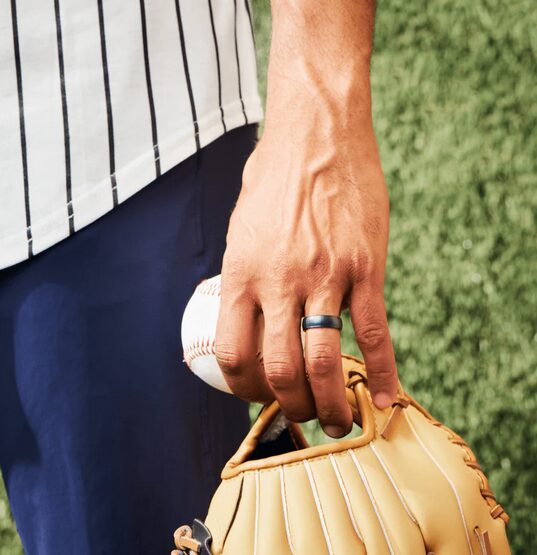
The documented safety advantage of silicone rings is mechanical. Ring avulsion, which is a soft tissue injury caused when a ring catches on a surface and is forcibly pulled from the finger, is well documented in emergency medicine.
Firefighters, construction workers, military personnel, and athletes are among the most commonly affected groups. Silicone breaks or stretches before those forces can fully transmit to the finger, removing the mechanism of harm. This is a real and meaningful benefit for anyone working in environments with machinery, climbing equipment, or weightlifting bars where a ring could snag.
Waterproofness is another functional advantage. Silicone is impermeable, which means the ring itself won’t degrade in water and doesn’t trap moisture in ways that contribute to skin irritation under normal conditions. However, it is still recommended to remove the ring after certain activities, like a swimming workout, to allow the skin to dry.
Design: Where the Silicone Ring Category Has Changed Most
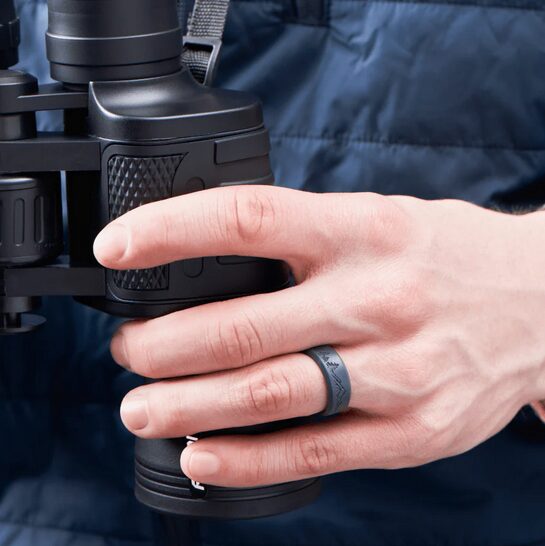
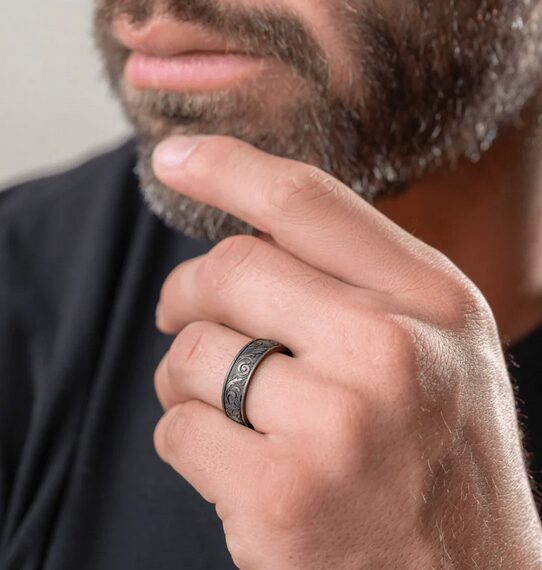
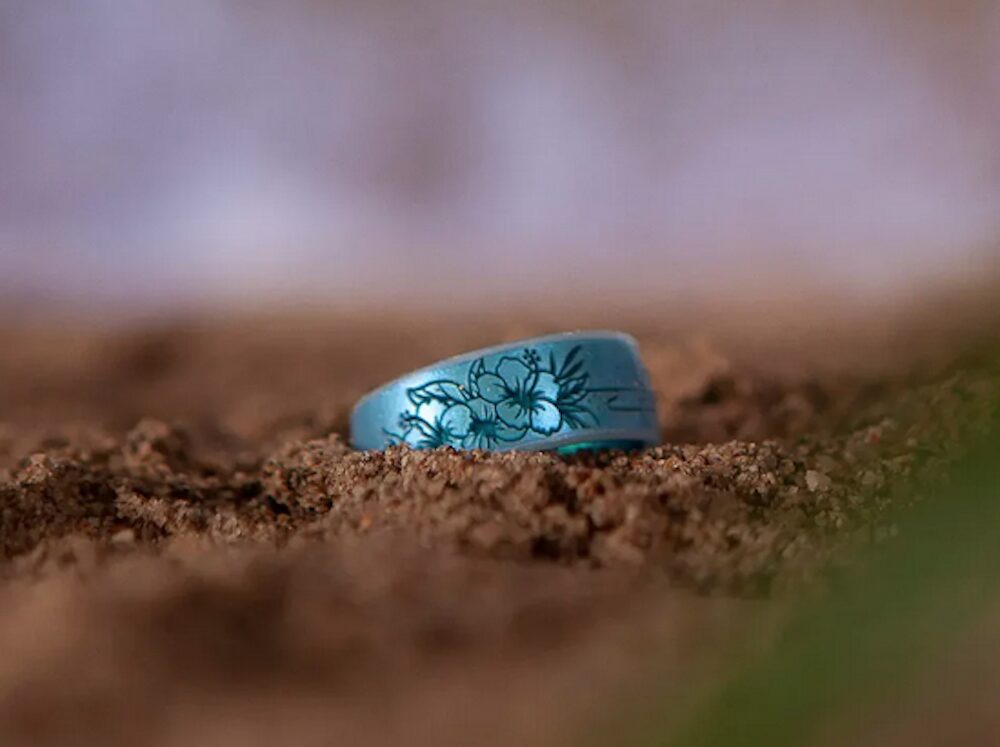
The silicone ring of ten years ago was essentially a colored rubber band with a ring profile. Current offerings span a considerably wider range, including hybrid constructions that pair a silicone inner band with a metal exterior in zirconium or titanium, slim-profile rings, and textured and etched surface treatments that add visual style without bulk.
Color range and design vocabulary have also broadened. Dark tones like black, charcoal, and deep navy continue to be the strongest sellers in the men’s rings category, consistent with broader trends in men’s accessories. Thinner profiles and two-tone color work have brought silicone rings closer to the visual language of traditional bands.
Sizing, Fit, and Long-Term Ownership
Silicone ring sizing follows standard ring sizing conventions. If you know your metal ring size, the same number applies to silicone. The material’s natural flexibility means it accommodates minor changes in finger size, potentially due to heat, hydration, or weight fluctuations, more comfortably than metal, which has no give.
Maintenance is minimal. Warm water and mild soap handle everyday cleaning. Silicone doesn’t tarnish, doesn’t require polishing, and won’t corrode.
Warranty coverage has become a practical differentiator in this category. Because silicone rings are worn in conditions that accelerate wear, like physical labor, sports, and outdoor environments, the expectation of eventual damage is built into the product category. Manufacturers offering lifetime replacement warranties for rips, tears, and wear are effectively pricing that replacement into the product, which changes the long-term cost calculation.
Who Silicone Rings Are Actually For
The honest answer is: more people than the original marketing suggested. The early silicone ring customer was a specific archetype — a CrossFit athlete, a wildland firefighter, a healthcare worker. Those use cases are still core. But the category has expanded to include anyone who finds a traditional metal band inconvenient in their daily life.
People who work with their hands. People who cook and clean constantly. Frequent travelers. Anyone with a metal allergy. People who’ve realized they take their ring off more than they wear it and want something they’ll actually keep on. The decision to wear a silicone ring full-time or only in certain situations isn’t a statement about how seriously someone takes their marriage. It’s a decision about what a ring needs to do in the context of a particular life.

However, the traditional metal band isn’t going anywhere. For occasions and contexts where its weight and permanence are the point, nothing substitutes for it. But the idea that it’s the only choice has been overtaken by the practical reality of silicone rings, which are durable, well-designed, and suited to the daily demands most people actually face.
Dear reader, you may like also this:
Oubaitori: The Beauty of Blooming in Your Own Time
Rising Pink: The Color That Speaks to the Soul
The Quiet Revolution of “Time for Yourself”