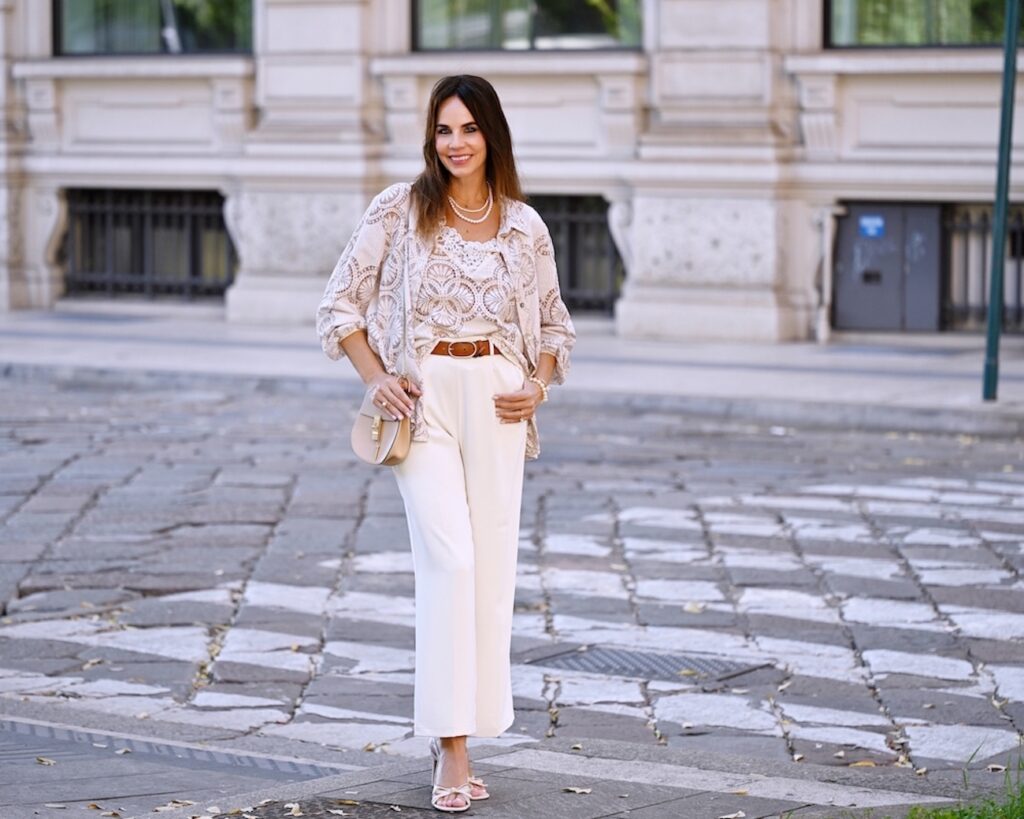

There was a moment in Milan this season when it became almost impossible to tell where the fashion show ended and the celebrity spectacle began. That, of course, is exactly what made Milan Fashion Week so fascinating. For Spring/Summer 2027, the clothes were important—but so was everything surrounding them: who was sitting in the front row, who had flown in from Los Angeles or New York, who was photographed outside Gucci, who showed up at Prada, who changed outfits three times in one day and who could turn a simple arrival into a full-blown fashion moment. And then there was Cardi B. Few people understood the assignment quite like Cardi, who seemed to treat Milan as her own personal runway, moving through the city from Gucci to Roberto Cavalli, Off-White, Blumarine and beyond, making the front row feel less like a place to watch a collection and more like another fashion event in itself. Her presence captured something that has become impossible to ignore: celebrity is no longer an accessory to Fashion Week. It is part of the fashion economy.
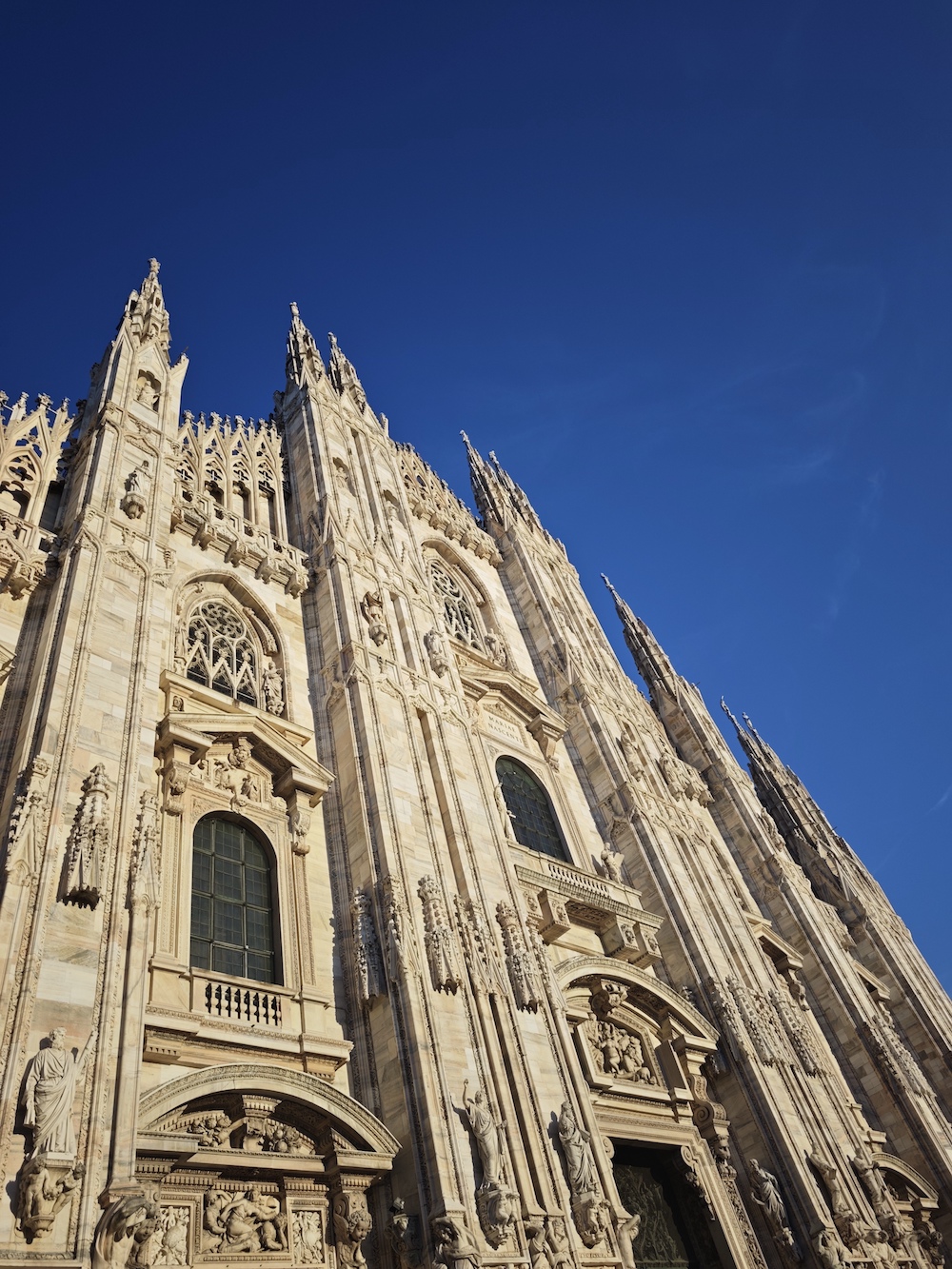
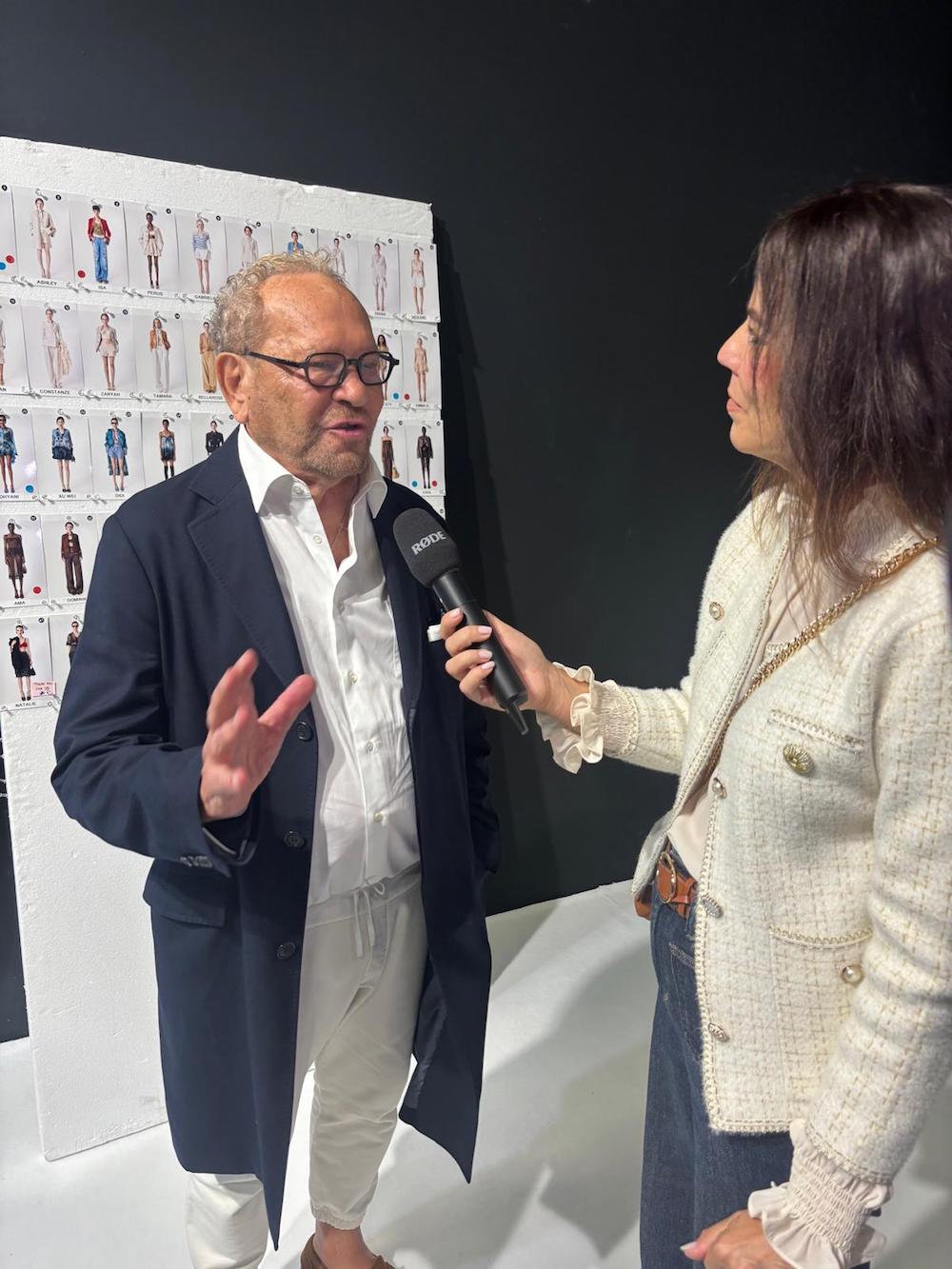
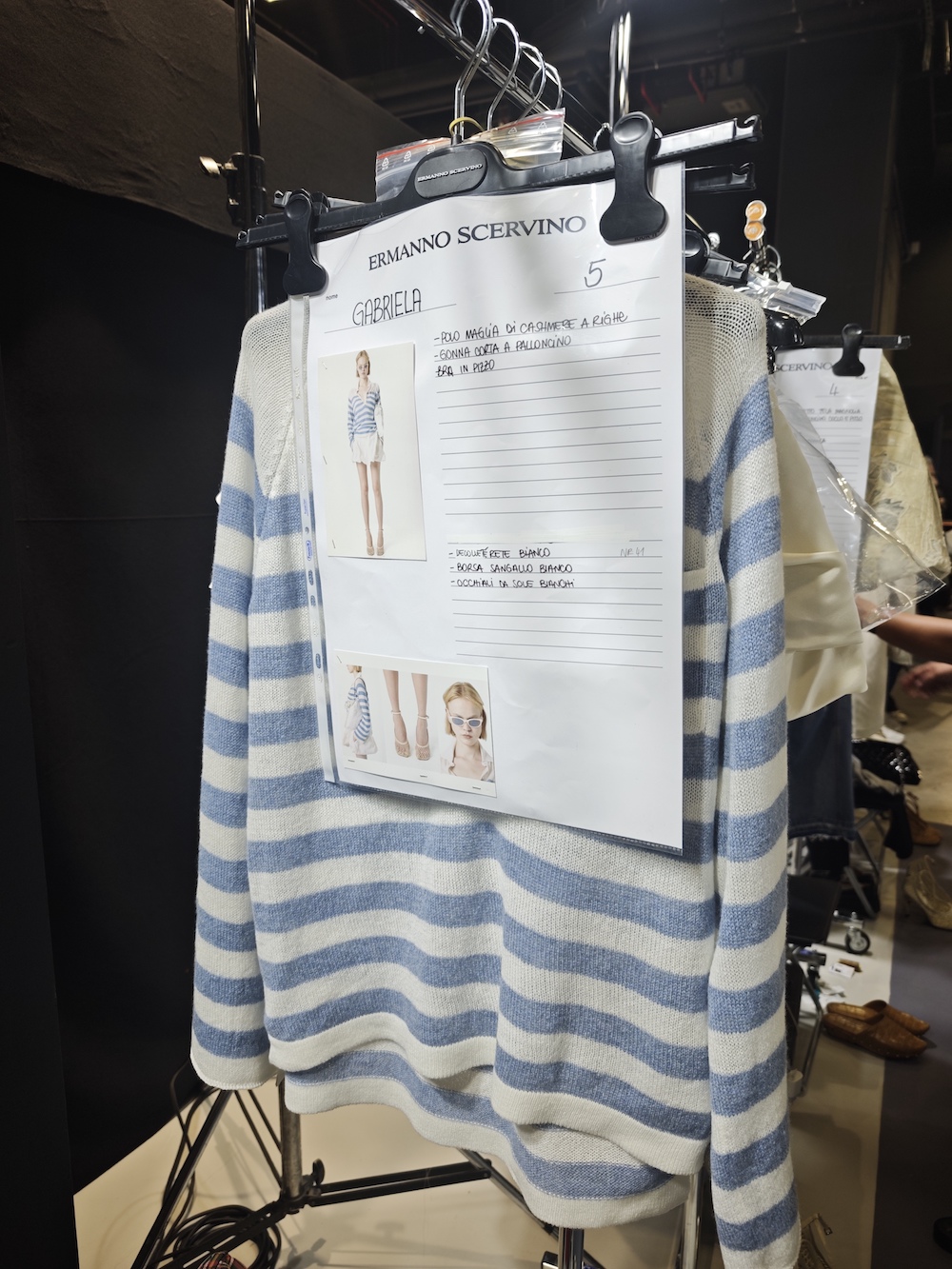
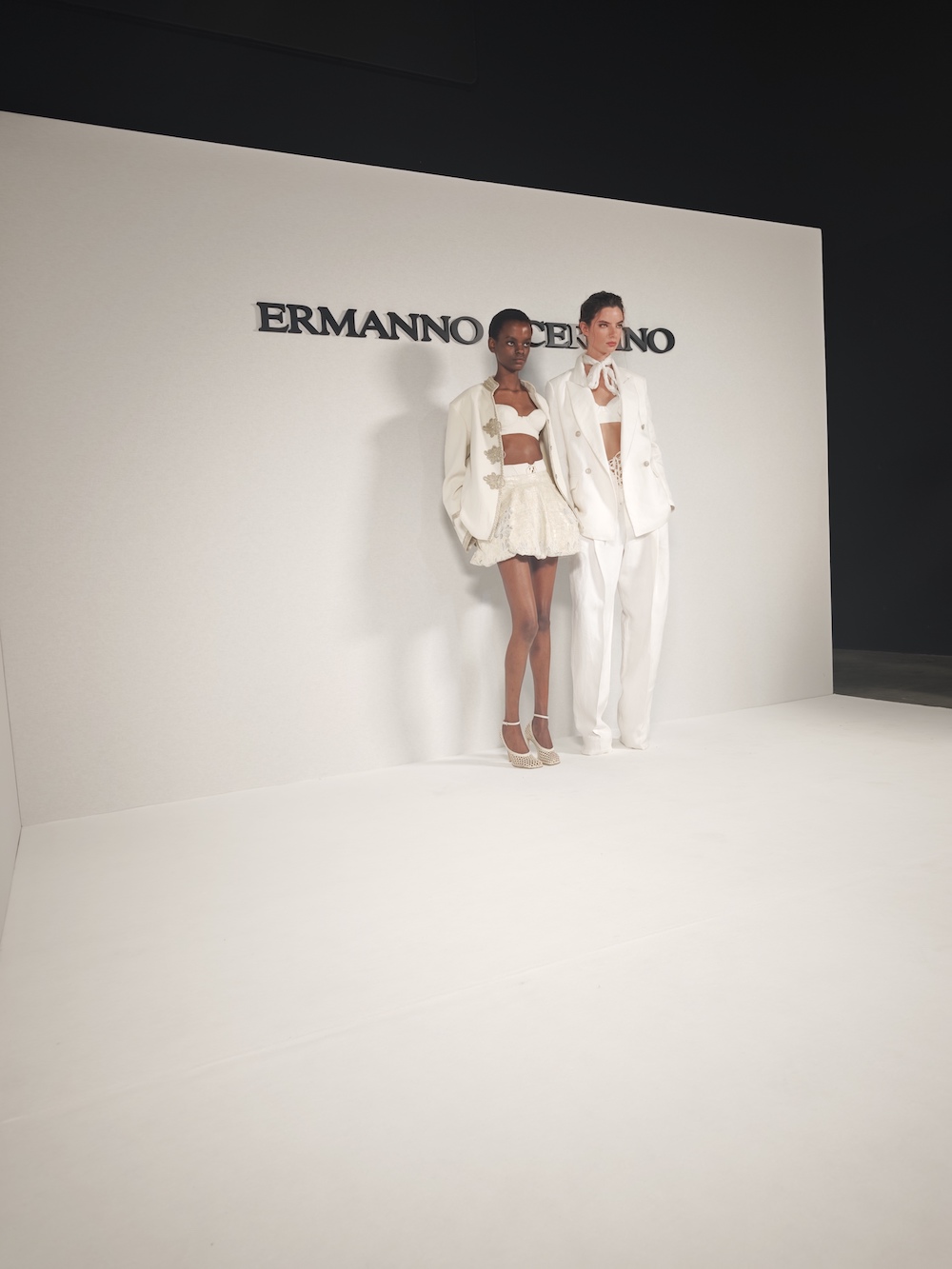
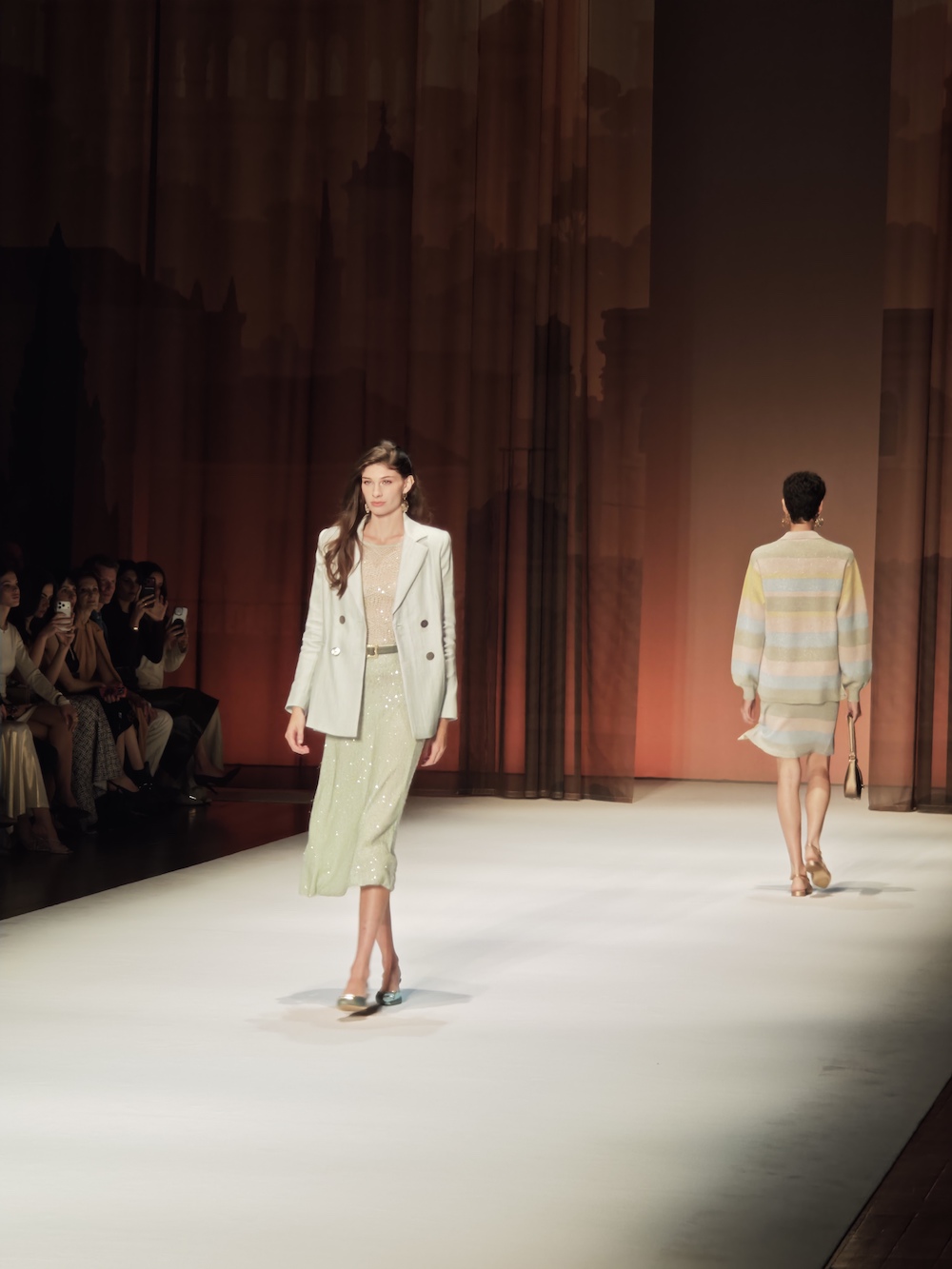
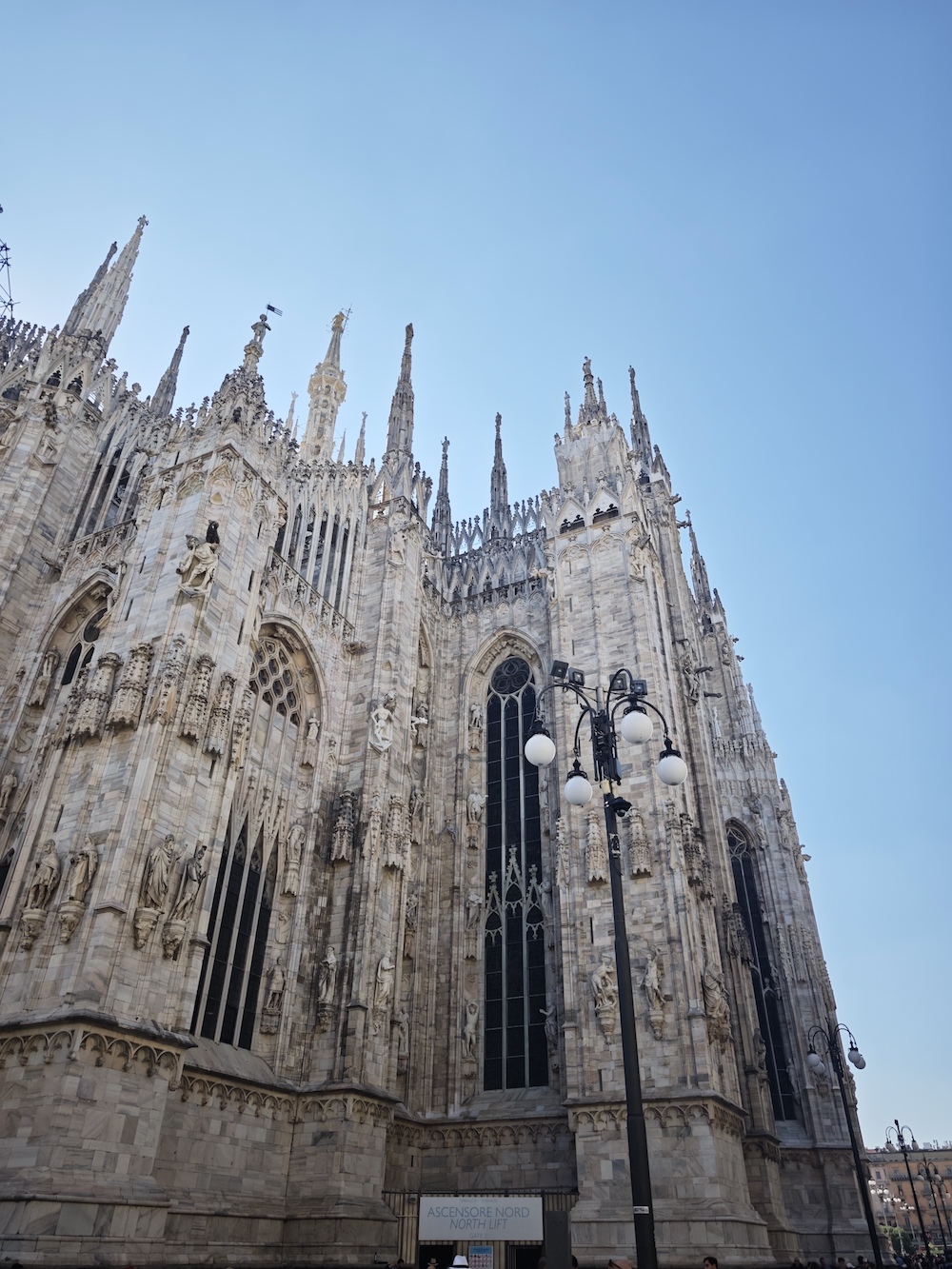
Milan leaned into that reality spectacularly with Vogue World, staged beneath the glass roof of the Galleria Vittorio Emanuele II. The evening brought together an extraordinary concentration of Italian fashion royalty and international stars, from Miuccia Prada and Raf Simons to Donatella Versace, Demna, Pierpaolo Piccioli and Alessandro Michele. Cardi B arrived in Versace, Jennifer Lopez delivered exactly the kind of high-glamour entrance everyone expected, and the whole thing felt less like a traditional fashion event and more like Milan staging its own answer to Hollywood. Perhaps that was the point: the fashion industry has become entertainment, and Milan is no longer pretending otherwise.
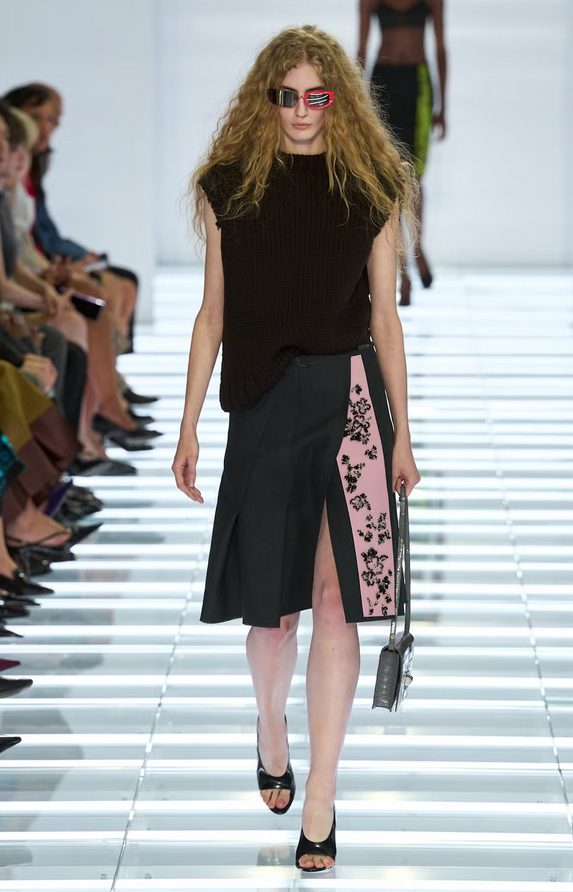
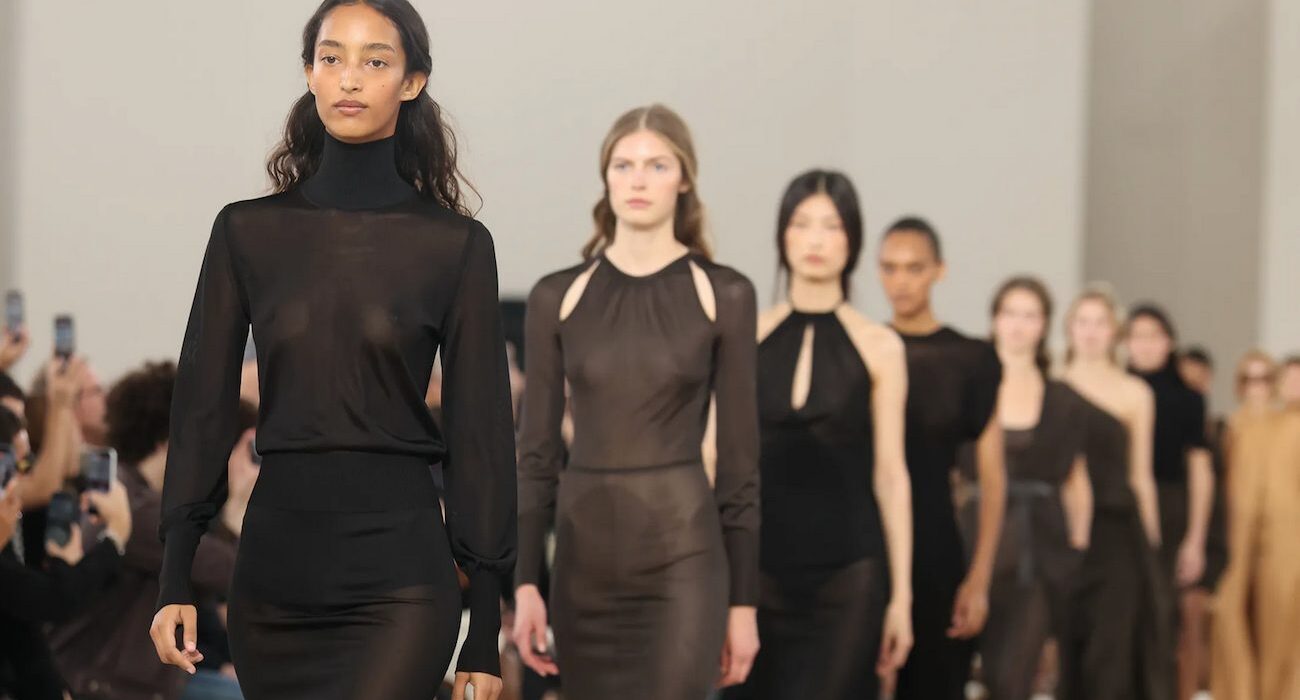
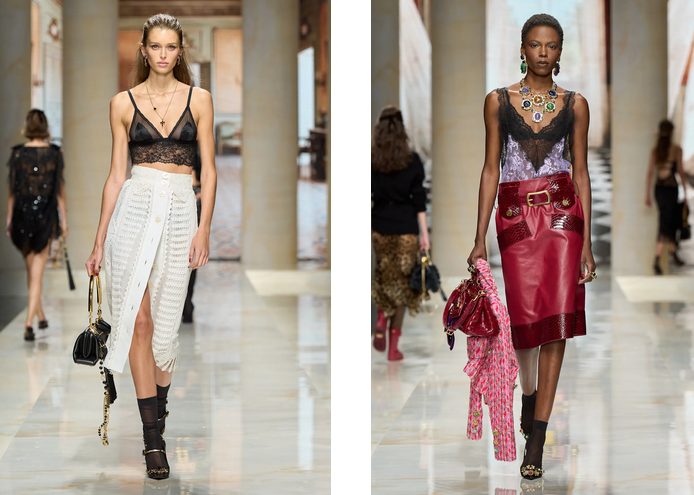
But underneath all the celebrity noise, something much more interesting was happening on the runways. The biggest surprise for Spring/Summer 2027 may be that the skirt is back—not quietly, not as one option among many, but as the main character. Prada made the argument almost aggressively. The collection featured 63 looks and, remarkably, no pants and no conventional dresses. Instead, Miuccia Prada and Raf Simons built an entire wardrobe around skirts: mini, midi, pleated, embellished, decorated with crystals, bows and unexpected details, paired with sweaters, shirts and tiny tops. It was one of those fashion statements that seems simple until you realize how radical it actually is. For years, the conversation has been dominated by pants: oversized tailoring, denim, trousers, cargos, low-rise silhouettes. Prada essentially asked what happens when you start again with the skirt. The answer was less about traditional femininity and more about possibility. A skirt can be sexy, intellectual, sporty, severe, romantic or completely strange depending on what you put next to it, and that idea—styling rather than a prescribed “look”—may be one of the strongest messages coming out of Milan.
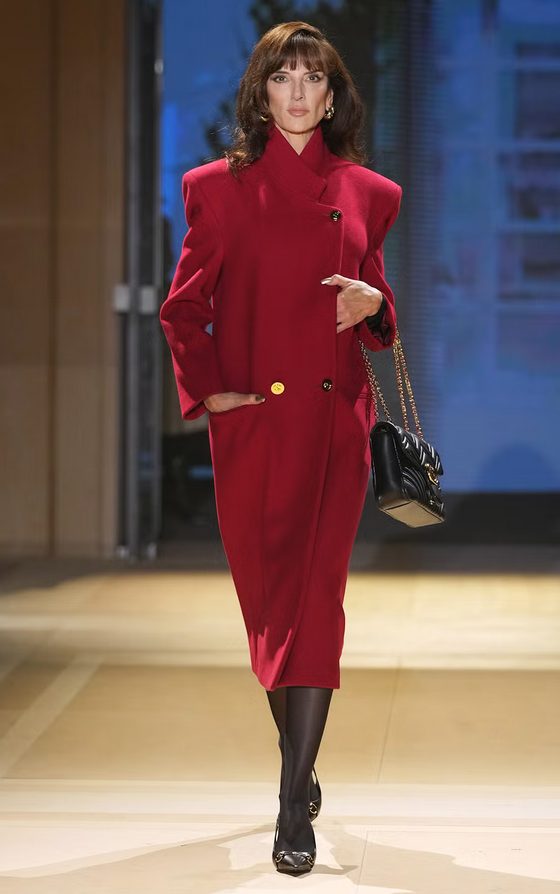
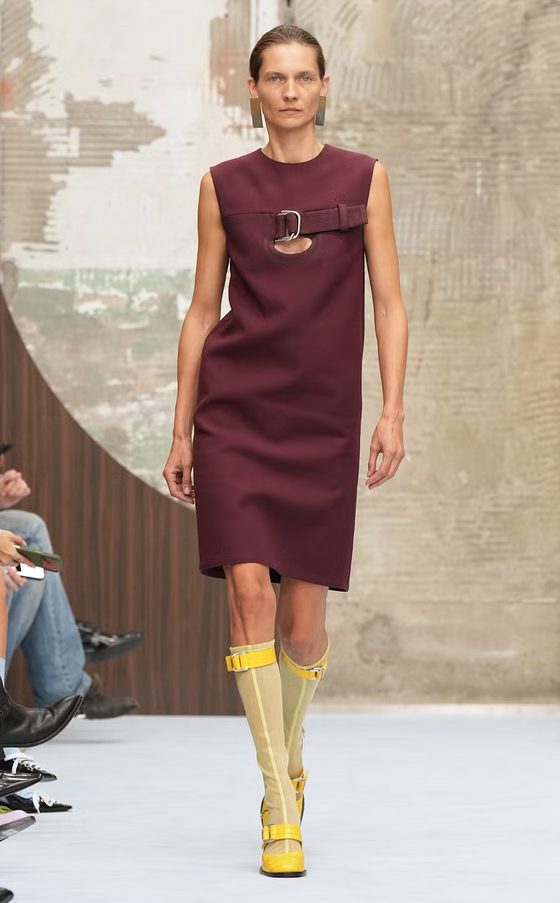
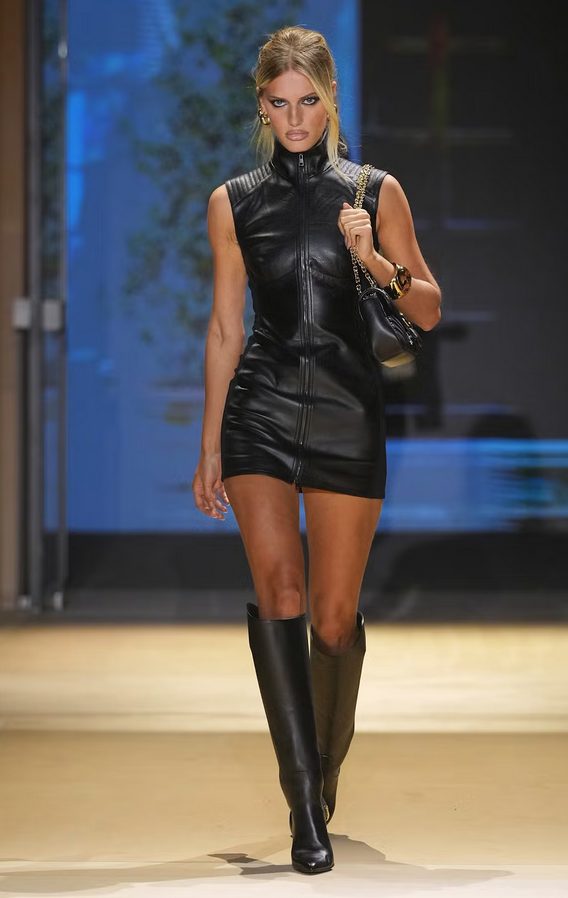
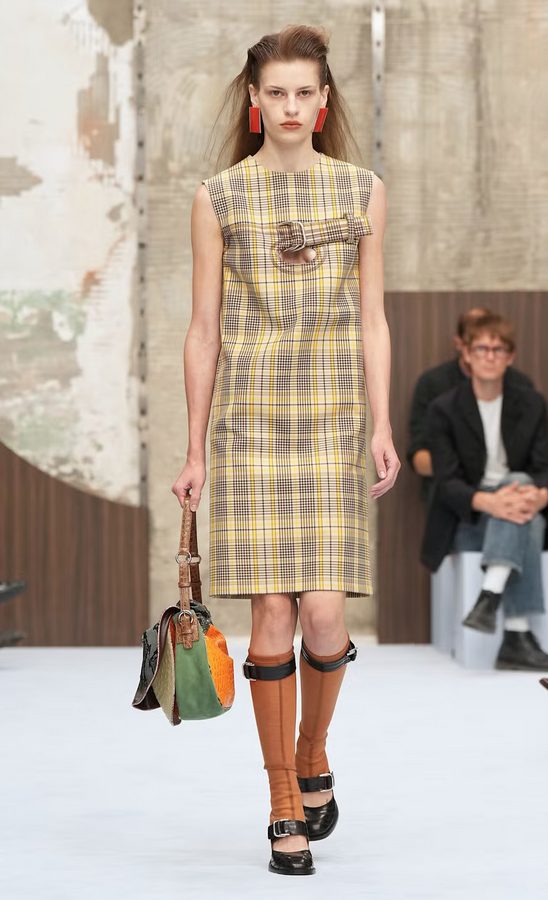
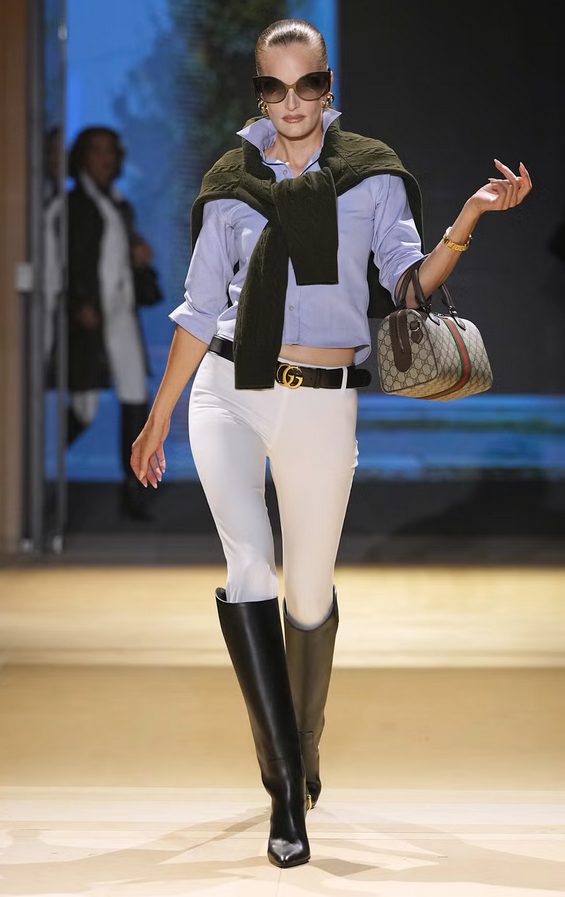
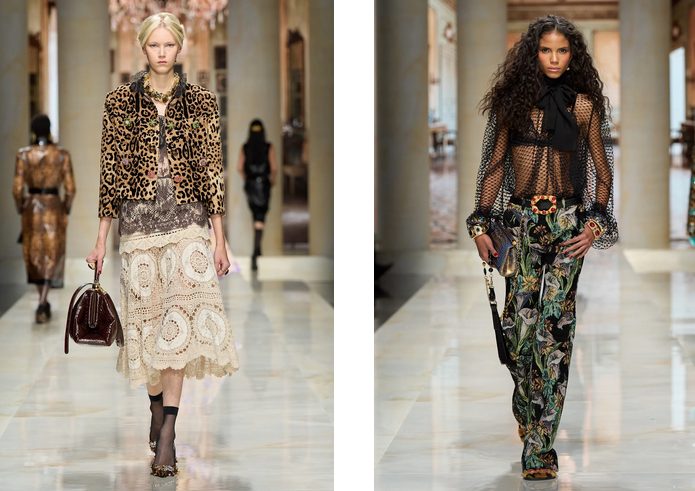
The Spring/Summer 2027 woman does not appear to be interested in looking perfectly coordinated. She wants contrast. At Gucci, Demna continued to build his vision of the house around exactly that tension, bringing equestrian references together with low-slung denim, tailored jackets with bombers, tartan with sleek evening pieces, and classic Italian codes with something distinctly more rebellious. It was a wardrobe designed for someone who might want to look polished at 6 p.m. and completely dangerous by 10. That push and pull between refinement and rebellion appeared throughout the city. At Marni, Meryll Rogge approached it from a more eccentric direction, mixing references from the 1960s, the late 1990s and early 2000s with utilitarian details, structured silhouettes, oversized buckles and sculptural jewelry. The clothes felt intentionally personal rather than algorithmically perfect, and that distinction matters. Fashion is coming out of an era in which trends could be identified, named and reproduced almost instantly: one TikTok trend became a retail trend, which became a street-style trend, which became a uniform. Milan seems to be pushing back.
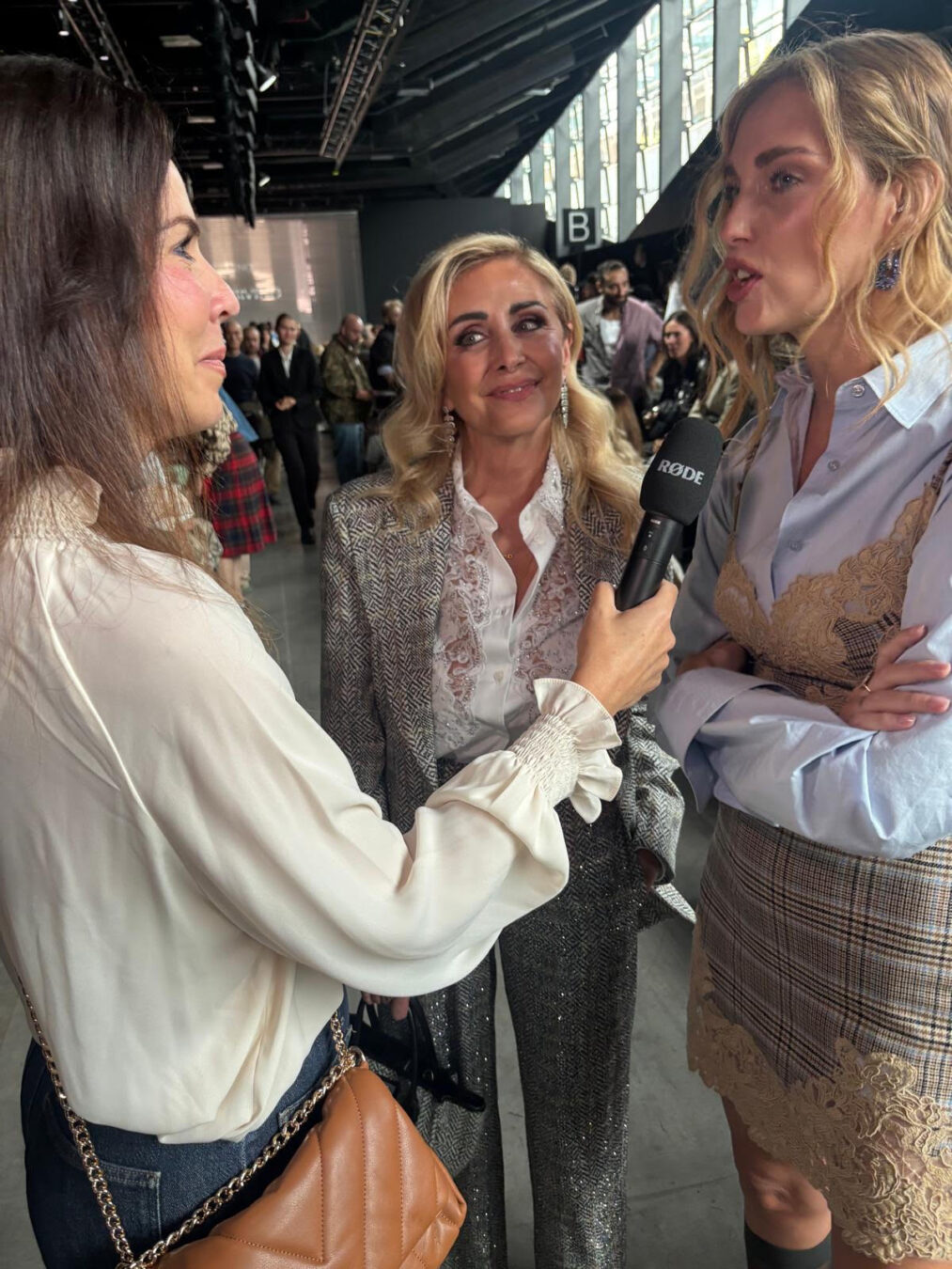
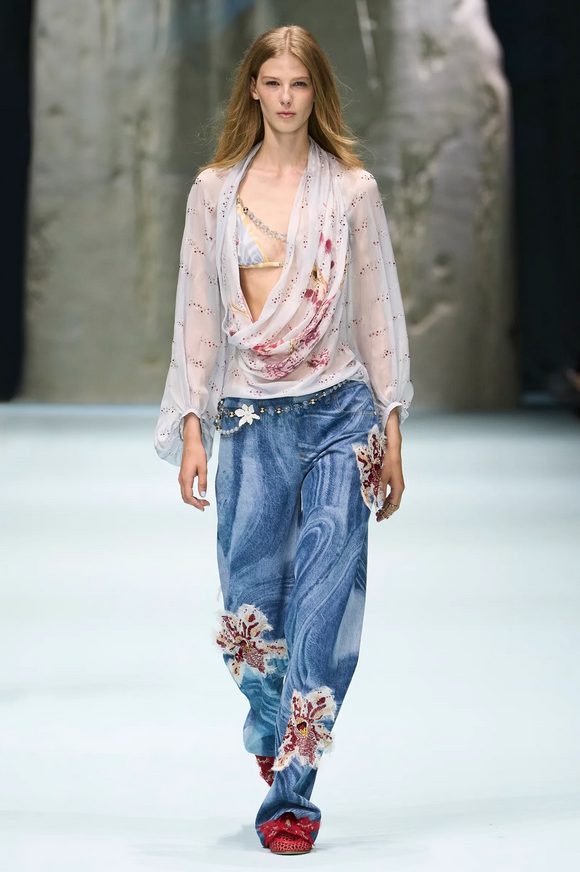
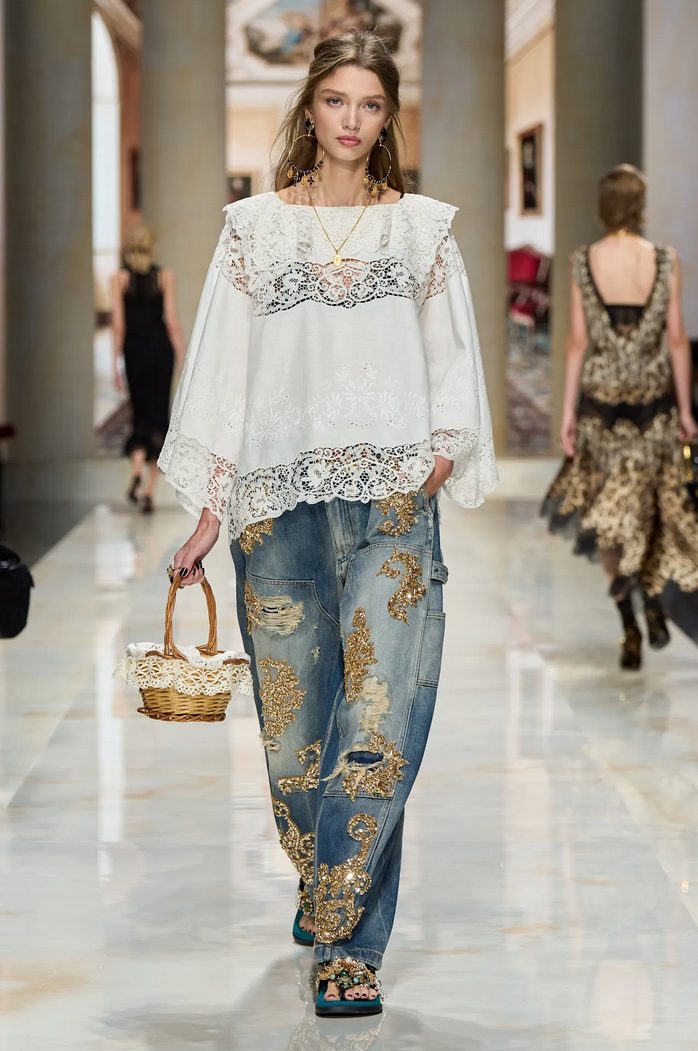
Dolce & Gabbana made that particularly clear with Stravaganza Siciliana, a collection built around the idea that your wardrobe does not have to belong to one decade. The 1920s can sit next to the 1950s, the 1970s can meet the 2020s, and vintage can coexist with something bought yesterday. The message is almost anti-algorithm: stop dressing like everyone else on your feed. The new luxury may simply be having a point of view. Sexiness is changing, too. There is still plenty of skin in Milan, but the conversation has moved away from straightforward exposure and toward tension: a tiny top under an oversized jacket, lingerie with denim, lace against heavier fabrics, transparent pieces underneath tailoring. Prada’s tiny tops and bralettes made this especially obvious. The body is visible, but the styling is what makes the look modern. Jennifer Lopez offered the celebrity version of the same idea throughout the week, particularly in Dolce & Gabbana, where corsetry, lace, animal print and dramatic silhouettes created the kind of unabashed glamour that only J.Lo can really pull off.
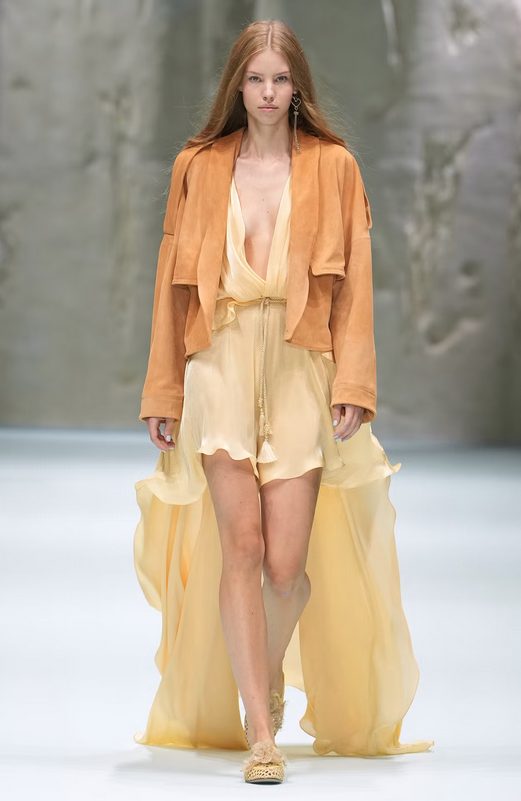
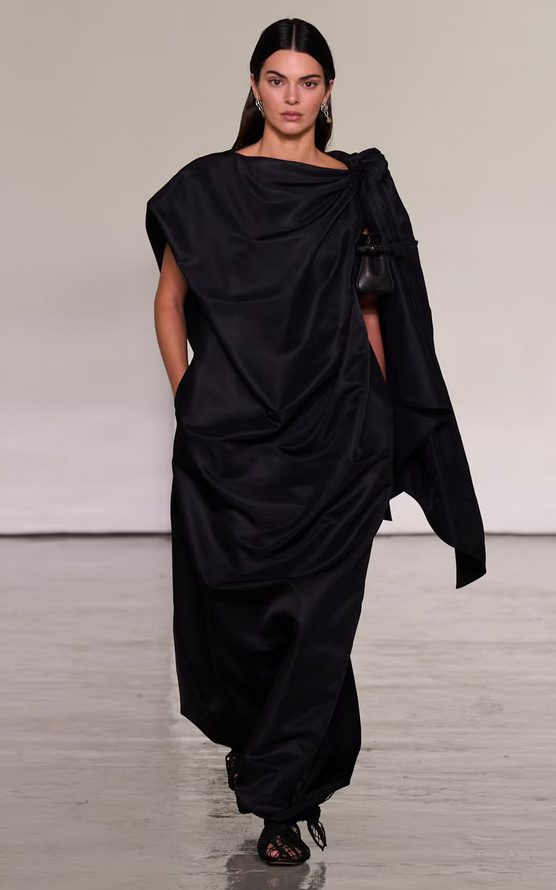
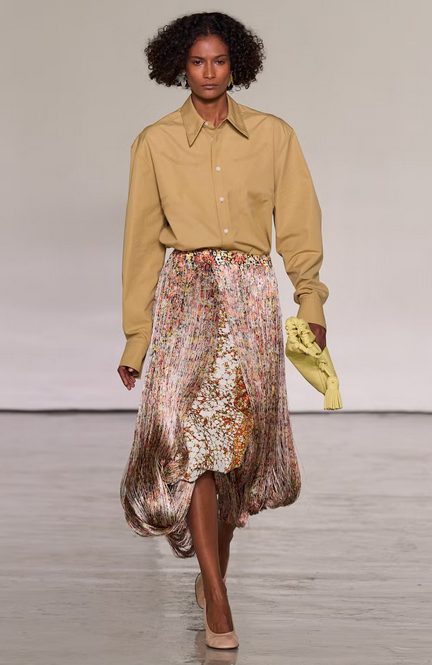
And then there is tailoring. Italian fashion without tailoring would be almost unthinkable, but the suit is changing. It is softer now, less corporate, less about power dressing in the old sense and more about playing with proportion. A giant jacket can be worn with an almost microscopic top, a formal suit can be paired with something sporty, and a traditionally masculine silhouette can become unexpectedly sensual. The suit is no longer telling you what kind of woman you are supposed to be; it is simply another tool. At Bottega Veneta, Louise Trotter focused on texture, movement and the physical quality of clothes, using soft surfaces, draping and tactile materials to give the collection an almost sensual quality. After years of fashion being increasingly designed for the camera phone, there is something refreshing about clothes that seem to demand to be experienced in person. You want to touch them. You want to see how they move.
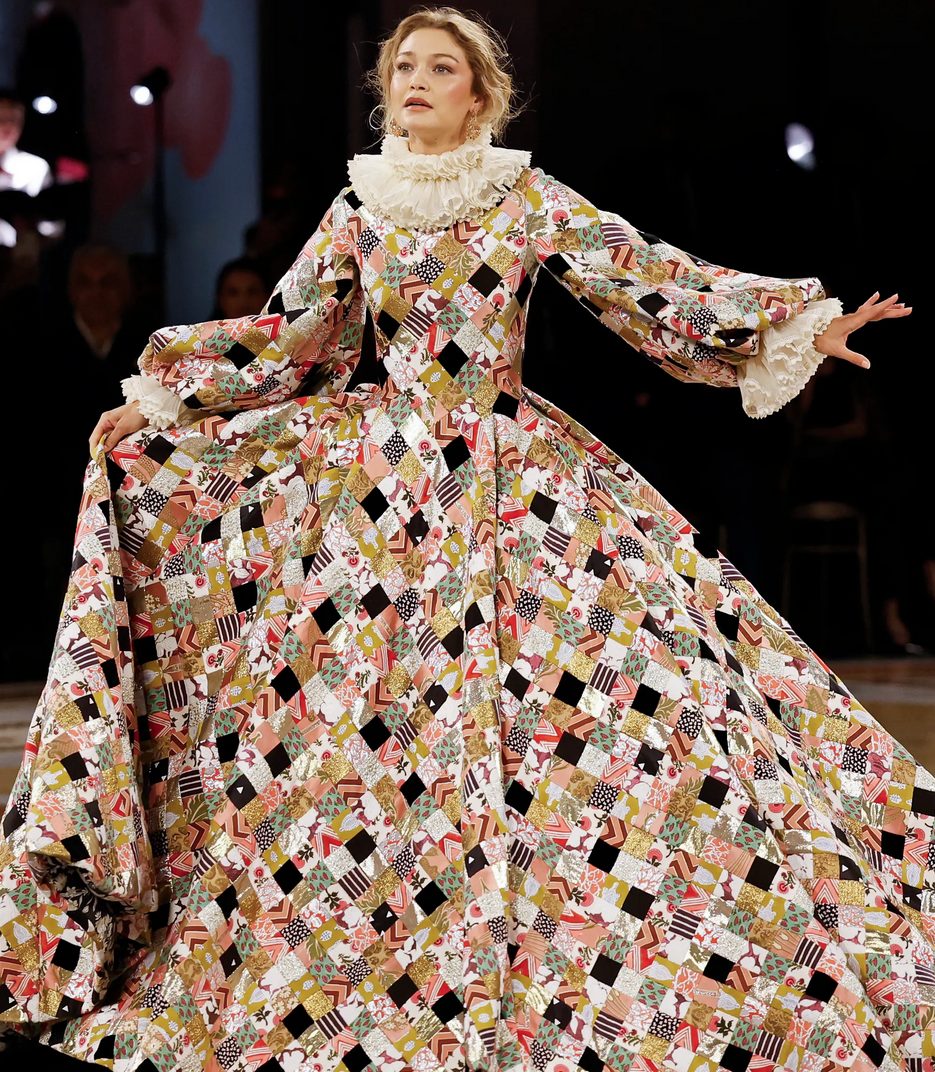
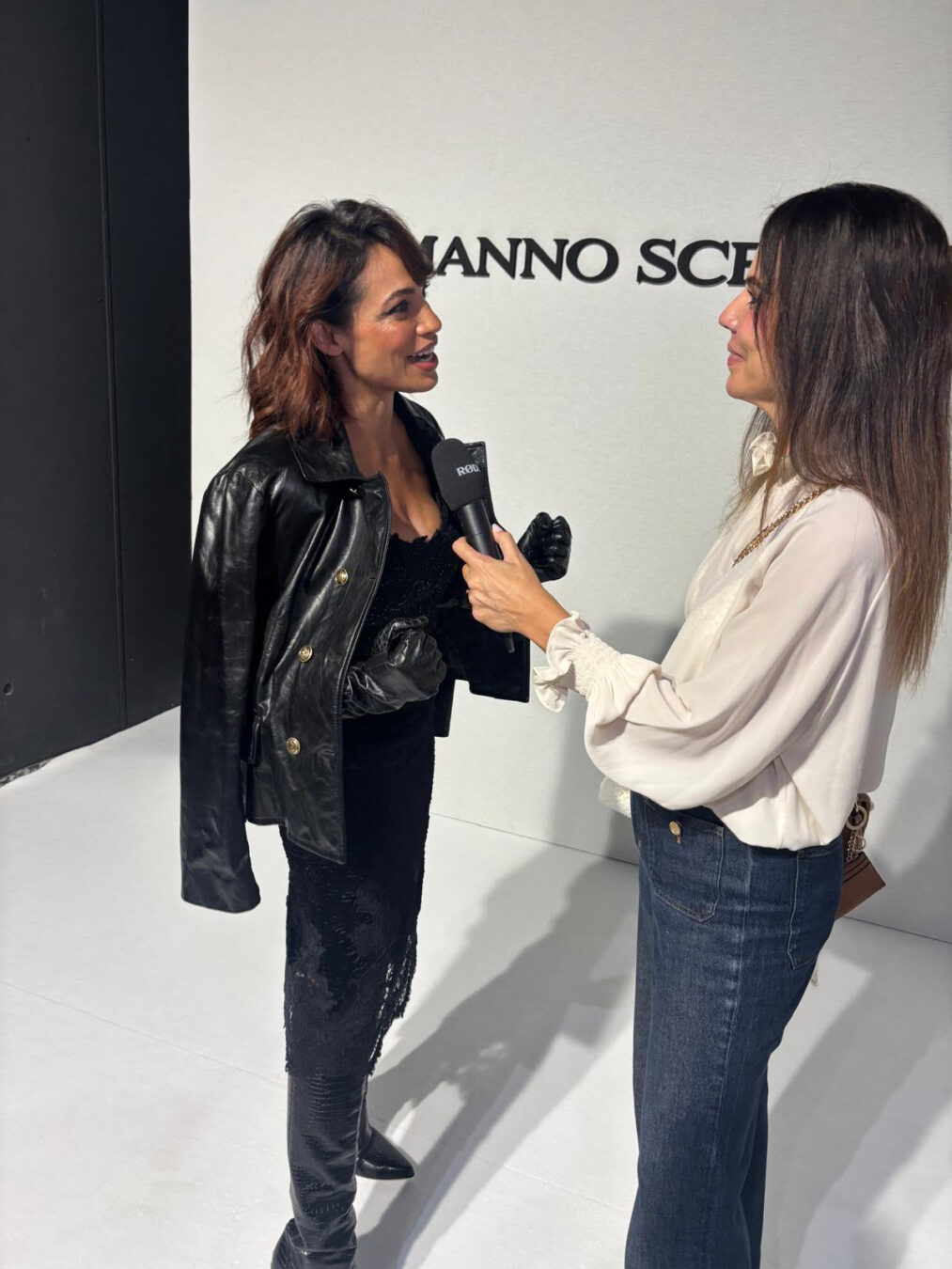
The city itself is changing with the clothes. Moschino staged its first collection by Simone Rizzo and Loris Messina on the roof of a parking garage, bringing the show closer to the streets and away from the increasingly polished bubble of traditional fashion venues. It was another reminder that Milan’s most interesting fashion conversation is happening between luxury and real life. At the same time, the front row has effectively become a second runway. Jennifer Lopez, Cardi B, Naomi Watts, Keke Palmer, Shawn Mendes, Bruna Marquezine, Monica Bellucci, Gigi Hadid, Hunter Schafer, Sadie Sink and Diane Kruger were among the names turning entrances and arrivals into their own fashion moments. What is fascinating is not simply that these people attended, but how much their presence now shapes the way Fashion Week is experienced. There are effectively two runways in Milan: the official one, where models walk in the clothes, and the one outside the venue, where celebrities arrive, photographers wait, street-style stars pose and the internet decides what matters before the collection reviews have even been published.
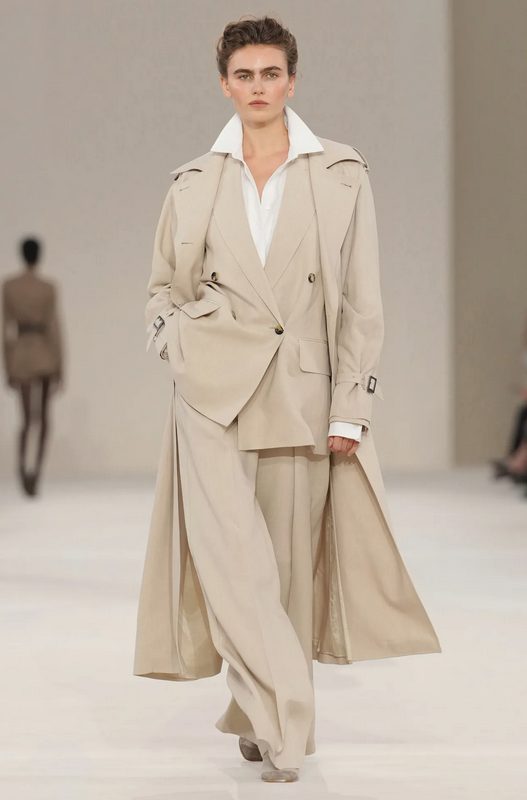
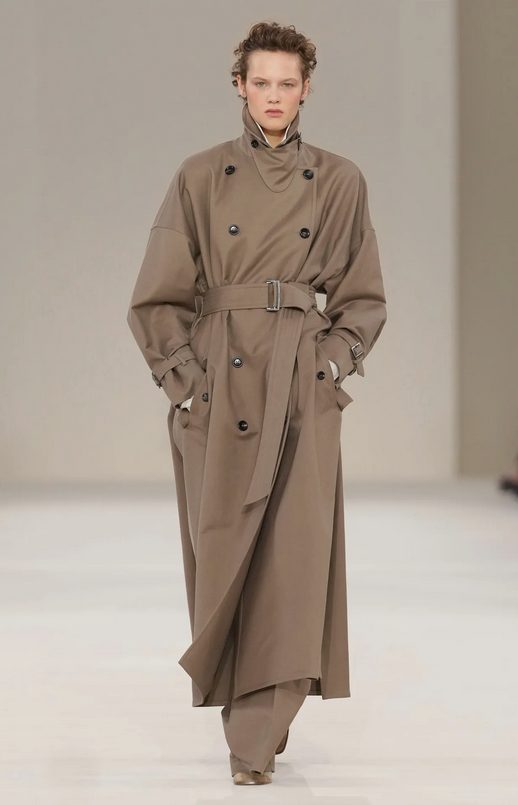
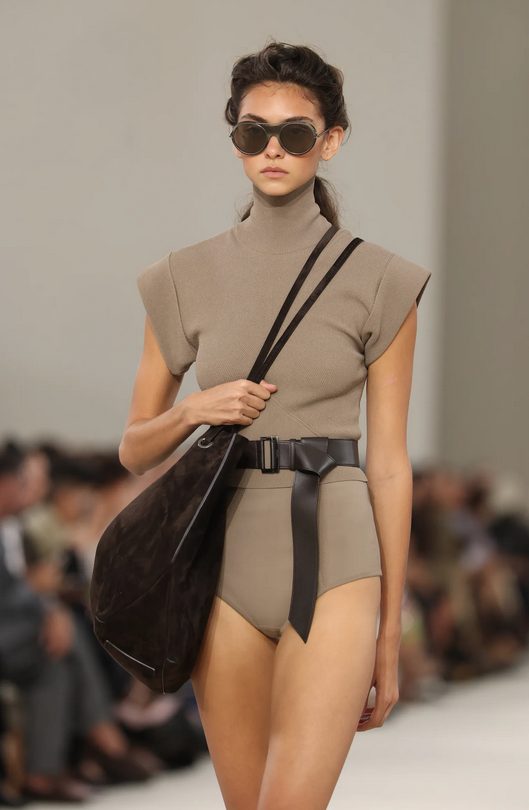
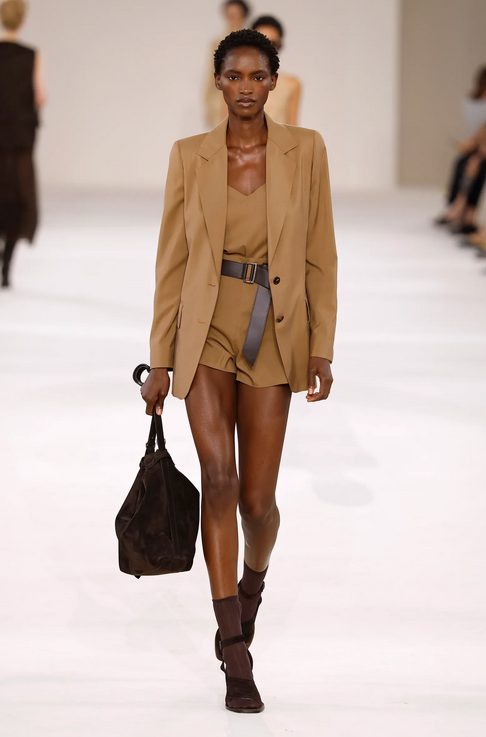
For an American audience, that shift may feel especially familiar. Fashion, entertainment and celebrity culture have been merging for years in the United States; Milan is simply becoming increasingly fluent in that language. But beneath the cameras, the real story of Spring/Summer 2027 is surprisingly clear. Fashion is loosening up. The skirt is back, tailoring is softer, lingerie is moving into daylight, denim continues to evolve, transparency is becoming more sophisticated, vintage is no longer a costume but part of everyday dressing, and the most interesting wardrobes are the ones that refuse to look as though they were purchased from a single rack. Milan is not giving us one must-have trend for next summer. It is giving us permission to mix things up. And after several years of fashion becoming increasingly obsessed with defining exactly what is “in,” that may be the most exciting trend of all: the future of fashion is having your own taste—and in Milan this season, that looked very good.
Dear reader, you may like also this:
The Quiet Freedom of Becoming Yourself