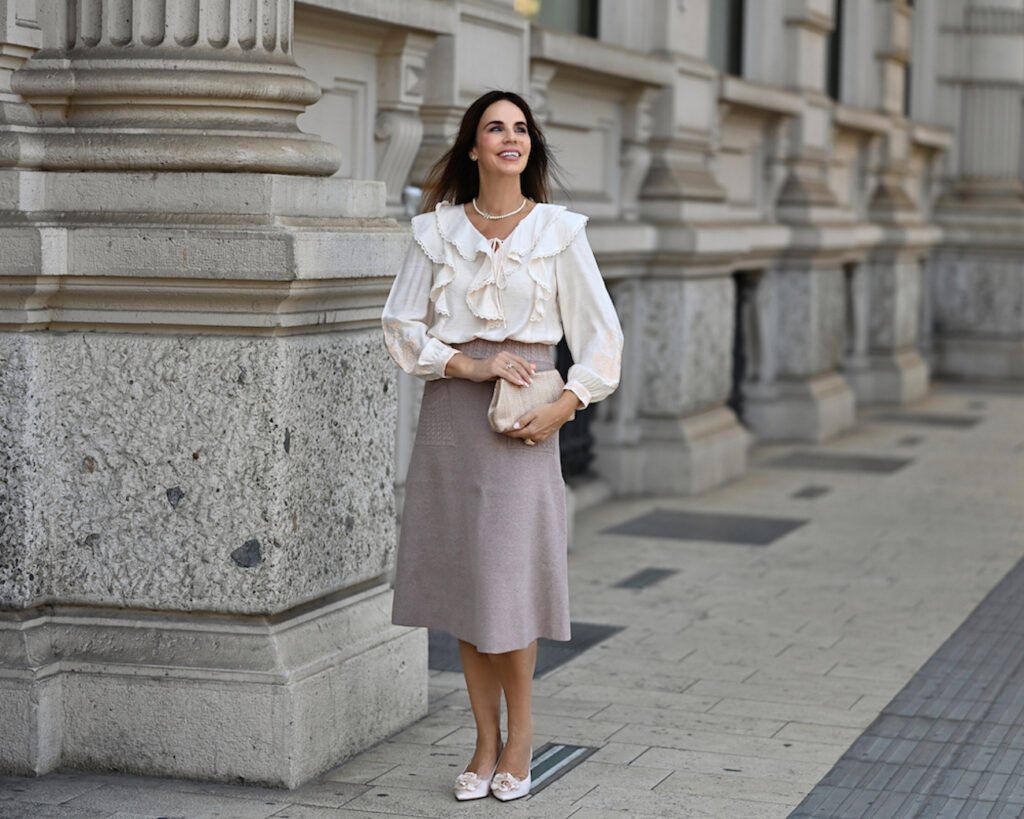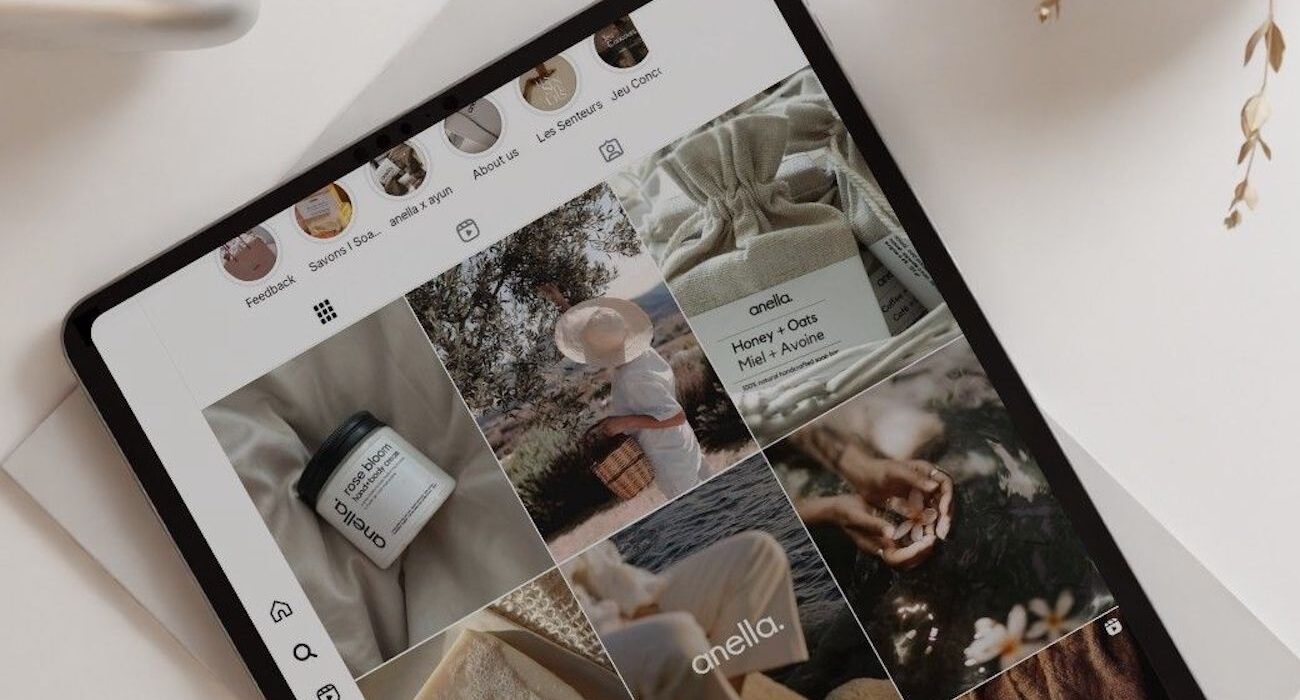

There are moments when opening Instagram can leave us with the strange impression that everyone else is living a better, more beautiful and somehow more complete life than we are. Someone is always travelling somewhere extraordinary, someone else seems to have found the perfect relationship, another person has just moved into a beautiful apartment, changed jobs, transformed their body or reached a milestone that makes our own life suddenly feel strangely ordinary. We scroll through photographs of romantic dinners, expensive hotels, perfectly dressed people, sunsets, celebrations and seemingly effortless happiness, and without even consciously deciding to do so, we begin comparing what we see with our own reality.
The problem is that we are comparing our entire life with carefully selected fragments of someone else’s.
That is one of the most powerful psychological illusions created by social media, because our own lives are experienced from the inside, with all their uncertainty, boredom, difficult conversations, financial worries, insecurities, unfinished plans and completely ordinary days, while the lives of other people reach us through a carefully edited window in which most of those things have disappeared.

We see our reality, but their highlights
Our everyday life contains everything. It includes the mornings when we do not feel attractive, the days when work is exhausting, the evenings when we feel lonely, the arguments we have with people we love, the plans that do not work out and the moments when we question whether we are actually moving in the right direction.
When we look at somebody else online, however, we rarely see the whole picture. We see the holiday, but not the stressful journey that came before it. We see the romantic dinner, but not the argument that may have happened earlier that day. We see the beautiful new home, but not the financial pressure behind it. We see the successful career, but not the years of rejection, uncertainty or failure that may have preceded it.
This does not necessarily mean that people are pretending. Most of the time, they are simply doing something completely natural: they are choosing what they want to share. The difficulty begins when our brain forgets that what we are seeing is a selection and starts treating it as an accurate representation of someone’s entire existence.
Our life has a backstage. On social media, other people’s lives often appear to have only a stage.

The psychology of comparison
Comparing ourselves with other people is not a new phenomenon. Human beings have always looked at those around them to understand where they stand, what is possible and how they are doing in relation to others. Social media has simply made this process almost continuous, giving us access to hundreds or even thousands of people with whom we can compare our appearance, relationships, careers, homes, bodies, social lives and lifestyles within a matter of minutes.
Psychologists often describe upward social comparison as the process of comparing ourselves with someone we perceive as better than us in a particular area. Research suggests that frequent or intense upward comparisons on social media can negatively affect self-evaluations and may be associated with lower mood, self-esteem and life satisfaction, although these effects vary considerably depending on the individual and the way social media is used.
The important part is that the other person does not necessarily have to be objectively happier, more attractive or more successful than we are. We only have to perceive them that way.
And sometimes that perception is enough to make our own life feel smaller.

The invisible ranking system
The most damaging comparisons are often the ones we barely notice ourselves making. We see a photograph and think, She is more beautiful than I am. We see somebody’s career announcement and think, Everyone is moving forward except me. We watch a couple travelling together and wonder, Why doesn’t my relationship feel like that? We see friends going out while we are at home and suddenly feel that we have somehow been left behind.
Little by little, we create an invisible ranking system in which everyone else seems to be progressing while we remain in the same place.
But there is a fundamental problem with this comparison: we know almost nothing about the reality behind the image.
We do not know whether that person is genuinely happy in their relationship, whether they feel confident when the camera is turned off, whether they are worried about money, whether they spent an hour taking photographs before choosing one, or whether the seemingly perfect moment represents ten minutes of a difficult week.
We are comparing ourselves with information that is fundamentally incomplete.
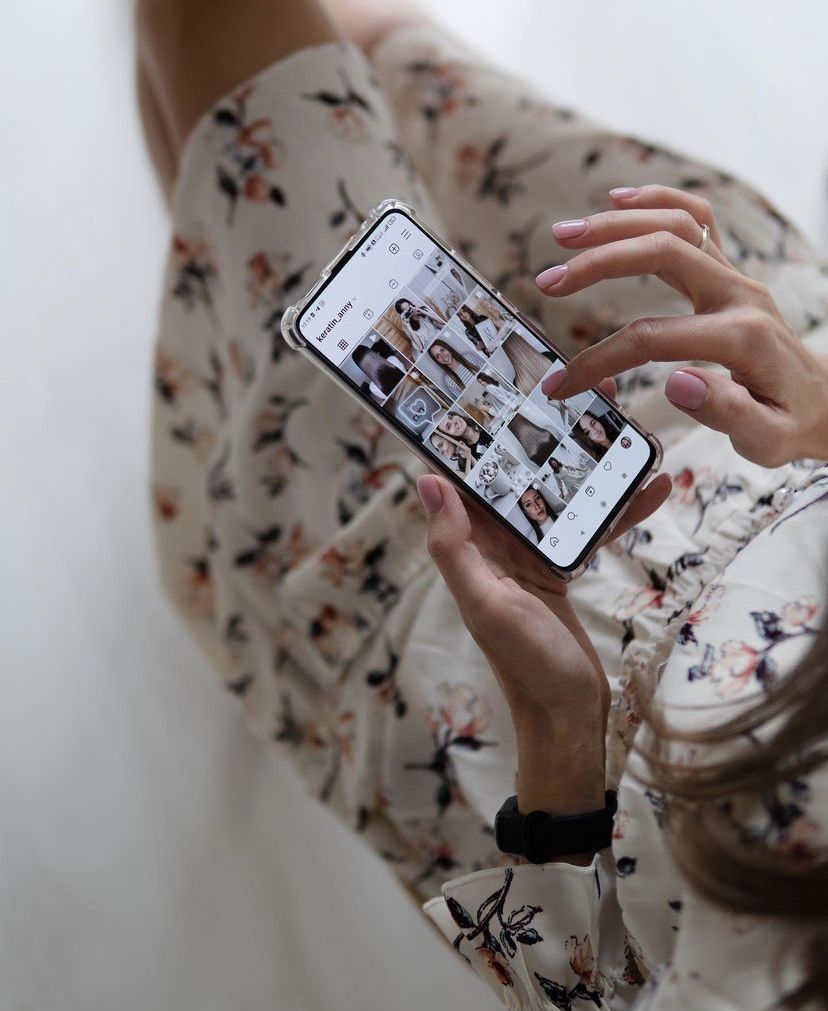
Why the feed can make ordinary life feel inadequate
Social media also changes the rhythm in which we encounter other people’s lives. In real life, we might see a friend once a week, a colleague every day, or a family member occasionally, and we experience them in many different emotional states. We see them when they are tired, stressed, distracted, excited, frustrated or simply doing nothing particularly interesting.
Online, however, we can move from one extraordinary moment to another without any transition. One person is in Paris, another is getting engaged, another has launched a business, another is at the beach, another has bought a beautiful coat, another is celebrating a birthday in a spectacular restaurant.
The effect can be strangely disorienting because our ordinary Tuesday is suddenly placed next to everyone else’s most photogenic moment.
Of course our life seems less exciting under those circumstances.
The problem is not necessarily that our life has become less interesting. It is that we have created an impossible comparison.
Sometimes we do not want their life — we want the feeling behind it
There is also something deeper happening when we feel jealous of what we see online. Often, we do not actually want the life depicted in the photograph. What we want is the feeling we imagine that life represents.
Maybe you do not really want to live in an expensive apartment, but you want to feel secure. Maybe you do not want that particular body, but you want to feel comfortable in your own. Maybe you do not want their relationship, but you want to feel loved. Maybe you do not want their career, but you want the feeling of having found your direction.
This is an important distinction because it turns comparison into information.
Instead of asking, Why don’t I have their life?, it can be much more revealing to ask, What exactly am I responding to in this image?
The answer may tell you something about what you are missing, what you value or what you would like to change, without requiring you to become someone else.

When we start experiencing life from the outside
Perhaps one of the most subtle consequences of social media is that we can eventually begin looking at our own lives as though we were an audience.
A beautiful dinner becomes more exciting because it can be photographed. A holiday feels more complete when it produces good pictures. An outfit becomes more satisfying when we know it will look good online. A quiet moment can even begin to feel strangely insignificant because nobody else will ever see it.
At that point, the problem is no longer simply that we are comparing ourselves with other people. We are beginning to experience our own lives through the imagined eyes of other people.
And when everything has to be interesting enough to document, ordinary happiness can start to feel insufficient.

Real life is not supposed to be spectacular all the time
One of the hardest things to remember in the age of social media is that a good life is not necessarily a visually impressive one.
Many of the things that make people genuinely happy are remarkably ordinary: waking up without feeling rushed, having coffee with someone you love, taking a walk, laughing with a friend, cooking dinner at home, feeling comfortable in your own space, doing work that gives you a sense of purpose or simply having an uneventful day in which nothing goes wrong.
These moments rarely become content.
They are not necessarily beautiful enough for Instagram.
But they may be the moments that actually make a life feel good.

We do not need to stop admiring other people
The answer is not necessarily to delete every social media app or convince ourselves that everything we see is fake. Some people really are having wonderful experiences. Some really are in love, successful, beautiful, talented or fortunate, and there is nothing wrong with acknowledging that.
The healthier shift is to understand that someone else’s happiness is not evidence of our own failure.
We can admire without feeling inferior. We can be inspired without deciding that we are behind. We can see someone’s beautiful home without concluding that ours is inadequate. We can celebrate someone else’s achievement without turning it into proof that we have achieved too little.
And if following certain people consistently makes us feel inadequate, anxious or dissatisfied with ourselves, there is nothing wrong with creating distance. Curating what we consume is not jealousy; sometimes it is simply a form of psychological hygiene.
The question to ask when you put your phone down
The next time you close Instagram and suddenly feel that your own life looks strangely disappointing, try not to immediately ask yourself, What am I missing?
Ask something else instead: How did I feel before I opened the app?
Because it is entirely possible that your life has not changed at all in those fifteen minutes. You have simply placed it next to a carefully edited collection of other people’s best moments. Your Monday morning cannot compete with someone’s holiday in the Maldives. Your untidy kitchen cannot compete with a photograph taken for an interior-design magazine. Your real relationship, with its misunderstandings and ordinary evenings, cannot compete with another couple’s anniversary photograph. And it should not have to. Real life is not a gallery of perfect moments. It is everything that happens between the photographs. Perhaps the real freedom from social media is not convincing ourselves that everyone else is secretly unhappy. It is understanding that we do not know what happens behind their photographs — and refusing to use their public image as the measuring stick for our private life.
Because someone else’s beautiful life does not make ours less beautiful. And a life that does not look extraordinary on a screen can still be, in the real world, a life that is deeply, quietly and genuinely good.
Dear reader, you may like also this:
The Quiet Beauty of a Life Well Lived
The Quiet Freedom of Becoming Yourself
Diary From Milan: The Fashion Week That Became a Celebrity Spectacle